
Latest News
- Home
- Latest News
- How to Inspect and Avoid Over-Torqued Self Drilling Screws on Roofs
2025.12.22
Latest News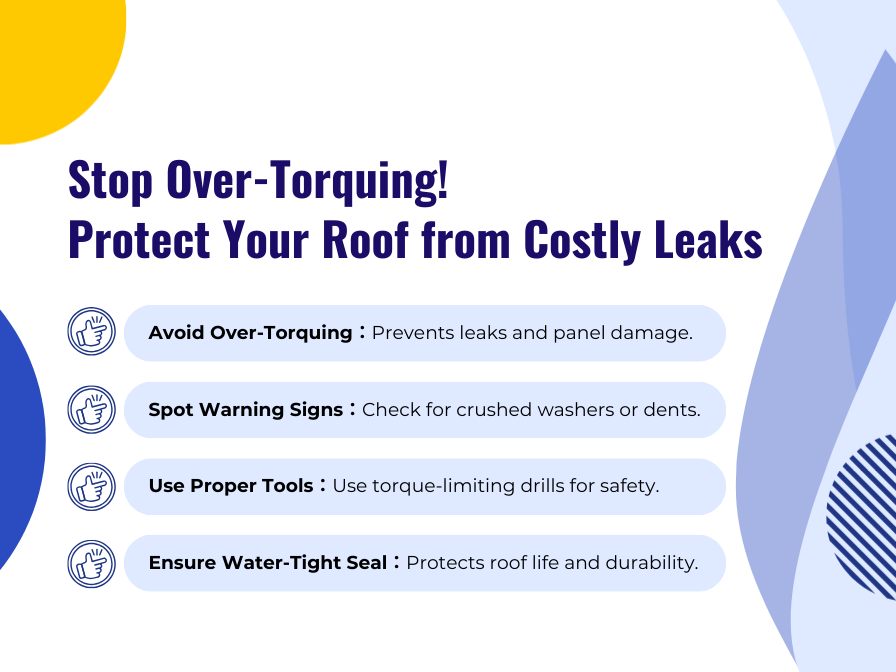
Installing metal roof panels requires care, especially with self drilling screws. Over-Torquing occurs when screws are tightened beyond recommended limits, risking panel damage, washer failure, and leaks. Even high-quality roofing screws can cause problems if over-tightened. Understanding proper torque and inspection ensures long-lasting, watertight, and structurally sound roofing.
Are You Damaging Your Roof Without Realizing It by Over-Torquing Screws?
Many homeowners think that tightening roofing screws as much as possible will secure panels better. In reality, Over-Torquing can cause hidden micro-damage that isn’t immediately visible. Common issues include:
-
-
Crushed sealing washers
-
Distorted panel surfaces
-
Uneven stress distribution
-
Over time, these problems can lead to corrosion, leaks, and panel failure under wind or snow loads.
Self drilling screws are designed for optimal holding strength with minimal effort, but proper torque is essential. Over-tightening can:
- Strip the metal or damage the screw coating, reducing corrosion resistance
- Over-compress washers, causing them to lose elasticity and fail to seal properly
Signs of hidden damage include small dents around screw heads, slightly deformed panels, or reduced water-tight performance.'
Educating installers and homeowners about these risks ensures your roof stays secure, watertight, and visually intact, preventing costly repairs and premature replacements.
What Are the Signs That Screws Have Been Over-Torqued?
Detecting over-torqued self drilling screws early is essential to prevent long-term roof damage. Key signs include:
- Deformed or flattened washer heads
- Stripped threads
- Indentations or rippling in metal panels, especially near clusters
- Inconsistent panel alignment, as over-tightened screws pull sections unevenly
Inspection tips:
- Check roofing screws after storms or high winds
- Compare tension between screws—over-torqued screws often feel tighter
- Inspect washer compression; over-compressed washers may no longer seal properly
Early detection allows corrective action before leaks or panel failure occurs. Regular checks combined with proper torque application protect both the roof’s appearance and the long-term performance of self drilling screws.
What Are the Consequences of Over-Torquing Roofing Screws?
Over-torquing can cause problems beyond appearance:
- Leaking: Excessive torque reduces washer effectiveness
- Structural weakness: Screws may strip panel substrate, creating weak points
- Fractures: Severe over-torquing can break self drilling screws, leaving panels unsecured
Additional risks:
- Accelerated corrosion when coatings are damaged
- Rust spots that weaken fasteners over time
A chain reaction of problems: compromised washers → panel deformation → water ingress → corrosion → eventual panel replacement.
Proper torque control is crucial for maintaining roofing screws performance and overall roof durability.
How Can You Properly Torque Self Drilling Screws?
Follow manufacturer specifications and use correct tools to avoid over-torquing. Key points:
- Goal: Compress washer enough to seal, without deforming it
- Avoid: “Tighten until it stops”—common cause of over-torquing
- Consistency: Use calibrated torque screwdrivers or drills with adjustable clutch
- Training: Ensure installers know proper torque techniques
Consistent torque prevents panel misalignment, structural stress, and premature failure, extending the lifespan of roofing screws.
What Tools Are Recommended to Prevent Over-Torquing?
Invest in quality tools to protect self drilling screws and roof panels:
- Adjustable torque drills and torque wrenches for precise control
- Depth-controlled drivers to maintain proper washer compression
- Correct bit size to reduce stripping or misalignment
- Clutch-driven drills with feedback to signal when the correct torque is reached
Proper tools and training improve consistency, reduce human error, and ensure a durable, long-lasting roofing installation.
Frequently Asked Questions (FAQ)
Q:How tight should self drilling screws be installed?
A:Tighten until the washer compresses fully without deforming the panel—avoid over-torquing.
Q:Can over-torquing cause metal roof panels to crack?
A:Yes, excessive torque can deform or crack panels and damage washers, reducing waterproofing.
Q:How do I know if a screw has been over-torqued?
A:Look for flattened washers, stripped threads, panel rippling, or screws that feel overly tight.
Q:Can over-torquing lead to leaks on a metal roof?
A:Yes, over-tightened screws can compromise washer seals, allowing water to penetrate panels.
Q:Can over-torqued screws be repaired or replaced?
A:Over-torqued screws should be removed and replaced with properly torqued self drilling screws.