
Latest News
- Home
- Latest News
- How to Prevent Rust and Corrosion on Stitching Screws and Roofing Fasteners
2025.12.22
Latest News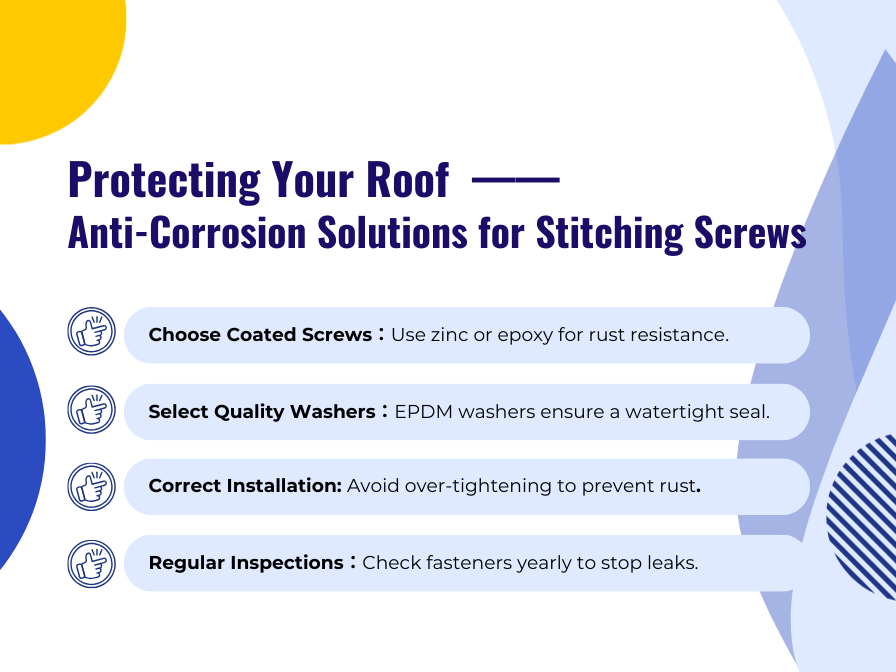
Selecting the right fasteners for metal roofs is crucial to ensure long-term durability and prevent costly repairs. Stitching screws, self drilling screws, and other roofing fasteners are essential components that hold roofing panels securely in place. However, improper selection, installation, or maintenance can lead to rust, corrosion, and compromised structural integrity.
This guide will help you understand the types of stitching screws, the features to look for, proper installation techniques, common mistakes, and maintenance strategies to maximize the lifespan of your roofing fasteners.
What Are Stitching Screws and How Do They Differ from Standard Screws?
Stitching screws are specialized fasteners designed to secure overlapping metal roofing panels or composite panels with precision. Unlike standard screws, stitching screws typically feature a sharp self drilling screw tip, a robust threaded shaft, and a built-in washer system that ensures a watertight seal. Standard screws may penetrate the metal, but they often fail to maintain consistent compression, resist thermal expansion, or prevent water ingress over time.
The washer and coating of stitching screws are critical for preventing corrosion. High-quality roofing fasteners often use EPDM or bonded rubber washers, which maintain elasticity and prevent leaks even under thermal cycling and vibration. Additionally, the shaft material is usually coated with zinc, epoxy, or stainless steel to resist rust in harsh environments, particularly in coastal or industrial areas. Choosing proper stitching screws ensures structural integrity, minimizes maintenance, and protects both the roof panels and underlying insulation from moisture damage.
Using incorrect screws or low-grade fasteners can result in early failure, such as stripped heads, loose panels, and water infiltration. By investing in premium stitching screws, roofers and homeowners ensure long-lasting performance and peace of mind, especially in regions prone to high winds, heavy rain, or salty air.
What Features Should I Look for in Stitching Screws and Roofing Fasteners?
When selecting stitching screws or roofing fasteners, certain features are essential to ensure durability and corrosion resistance. First, the tip design is crucial. Self drilling screws should be sharp enough to penetrate the roofing material cleanly without pre-drilling, preventing cracks and alignment issues. Second, the screw shaft must have a corrosion-resistant coating, such as galvanized zinc, epoxy, or stainless steel, which helps prevent rusting over time.
Third, washers play a major role in preventing leaks. High-quality stitching screws use bonded or EPDM washers that retain flexibility, creating a tight seal even after years of thermal expansion or contraction. Fourth, the thread design must grip the metal panels securely without damaging the insulation or composite layers. This is particularly important for roofs with multiple layers or insulated panels.
Other features to consider include head type and finish. Hex or pan-head screws improve installation efficiency, while powder-coated or color-matched finishes enhance aesthetics and provide additional protection against UV degradation. Selecting high-quality roofing fasteners with these characteristics ensures long-lasting, weather-resistant performance, reduces maintenance costs, and prevents premature failure.
How Do You Properly Install Stitching Screws on a Metal Roof?
Proper installation of stitching screws is key to maximizing the lifespan of your roofing system. Begin by ensuring panels are correctly aligned and overlapping per manufacturer guidelines. Using high-quality self drilling screws, drill into the panel along pre-marked lines or ribs to ensure even load distribution. Avoid over-tightening screws, as this can compress washers excessively, damage the panel surface, or reduce flexibility needed for thermal movement.
Each screw should penetrate the metal panels completely while maintaining a watertight seal with the washer. Screws at edges, corners, and overlaps require particular attention, as these areas are more prone to wind uplift and water infiltration. Consistency is vital; uneven torque or spacing can compromise the integrity of the roof.
Additionally, using screws with corrosion-resistant coatings ensures they withstand moisture, humidity, and coastal conditions. Proper installation of stitching screws combined with correct spacing, washer compression, and alignment guarantees a durable, long-lasting roof that resists leaks, rust, and structural degradation over decades.
What Are the Most Common Installation Mistakes to Avoid?
Even experienced installers sometimes make errors that compromise roof longevity. One common mistake is over-tightening stitching screws or roofing fasteners, which can crush washers, crack panels, and reduce the effectiveness of the watertight seal. Under-tightening is equally problematic, as loose screws allow panels to shift and water to infiltrate.
Another frequent error is improper screw spacing. Fasteners placed too far apart increase stress on panels and may lead to sagging, while inconsistent alignment can reduce wind resistance. Using low-quality screws without corrosion-resistant coatings or reusing old washers can also accelerate rust formation and reduce roof lifespan.
Failing to inspect the roof after installation is another risk. Loose screws, missing washers, or initial signs of rust should be addressed immediately. Avoiding these mistakes—using high-quality self drilling screws, ensuring proper torque and spacing, and conducting regular inspections—will prevent premature roof failure and maintain both performance and aesthetics.
How Often Should You Inspect and Maintain Your Roofing Fasteners?
Regular inspection is essential to protect your roofing investment. Experts recommend checking stitching screws and metal roofing fasteners at least once a year, as well as after storms or extreme weather events. Look for loose screws, rust, damaged washers, or any sign of water ingress. Early detection allows corrective action before minor issues escalate.
Maintenance may include tightening loose screws, replacing corroded fasteners with high-quality self drilling screws, and ensuring washers remain seated correctly. In harsh environments, such as coastal areas, additional checks are recommended to prevent corrosion from salt exposure. Documenting inspection results and scheduling periodic maintenance ensures the roof remains structurally sound, watertight, and visually appealing for decades.
Proactive maintenance not only prevents leaks and structural damage but also extends the lifespan of your roof, saving time and money in the long run.
Frequently Asked Questions (FAQ)
Q:What is a stitching screw and when should I use it?
A:A stitching screw secures overlapping metal panels, ideal for metal or composite roofs.
Q:Should I pre-drill holes before installing stitching screws?
A:Usually not—self drilling screws can penetrate panels directly, pre-drill only for very thick or hard materials.
Q:How do I prevent stitching screws from rusting or corroding over time?
A:Use corrosion-resistant stitching screws with coated shafts and sealed washers; inspect and maintain regularly.
Q:Are there specific stitching screws for high-wind or coastal areas?
A:Yes, use stainless steel or coated stitching screws designed to resist corrosion and high-wind forces.
Q:Are stitching screws compatible with insulated or composite metal panels?
A:Yes, choose self drilling screws with proper length, thread, and washer to protect insulation and panel layers.
Further reading:
Top 5 Mistakes When Choosing Roofing Fasteners for Polycarbonate Roofs
How to Fix Polycarbonate Roofing:Step-by-Step Leak-Proof Guide
How to Choose Polycarbonate Thickness? Roof Material Guide
Stop Skylight Leaks during rainy days
Bunnings Roof Screws vs Professional Roof Screws: Which to Use?
Sandwich Panel Screw Tips-Choosing and Installing Metal Roof Self Drilling Screws
How to Inspect and Avoid Over-Torqued Self Drilling Screws on Roofs