
Latest News
- Home
- Latest News
- Stop Skylight Leaks during rainy days
2026.01.07
Latest News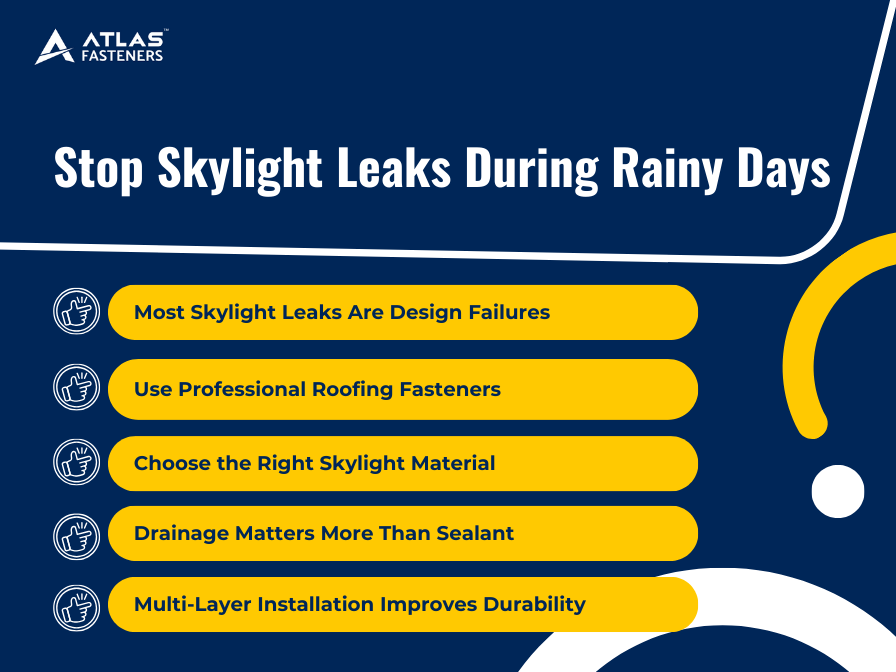
Why 90% of Metal Roof Skylights End Up Leaking
Installing skylights in metal roofs can dramatically improve natural lighting and ventilation. However, industry data and field inspections show that up to 90% of metal roof skylights develop leaks over time. The primary causes include improper sealing at joints, unsuitable fasteners, and insufficient drainage design.
Many installers rely solely on sealants and gaskets, overlooking how water naturally flows across the roof. Rainwater tends to accumulate around screw holes or joints, leading to skylight leaks when it rains. In coastal or high-humidity regions, inadequate roof slope or drainage design further exacerbates the problem.
Have You Chosen the Right Roofing Fasteners?
Selecting the proper fasteners is critical for leak prevention. Cheap self-tapping screws can loosen, corrode, and compromise waterproofing over time. Professional roofing fasteners are engineered for metal roof skylights, featuring corrosion-resistant materials and thread designs that ensure a secure, watertight installation.
Key Considerations:
- Material: high-quality galvanized steel suitable for coastal or humid conditions.
- Sealing Components: Integrated rubber washers or gaskets prevent water infiltration.
- Length and Spacing: Correct sizing according to sheet thickness and roof profile avoids concentrated stress points.
Field experience shows that using professional fasteners can reduce the risk of skylight leaks by up to 80%, especially for multi-layer roofs or structures exposed to frequent rain and wind.
Glass vs. Polycarbonate Sheets: Which Is Better for Metal Roofs?
The choice of skylight material significantly affects durability and maintenance. Traditional glass offers high transparency but is heavy and fragile, requiring robust support structures. Polycarbonate sheets are lighter, impact-resistant, and provide thermal insulation, making them a common choice for metal roofs.
| Material | Advantages | Disadvantages |
| Glass | High clarity, scratch-resistant | Heavy, fragile, requires professional installation |
| Polycarbonate | Lightweight, impact-resistant, UV-stabilized | May yellow or become brittle over time |
Structural Drainage Design: Why “Channeling Water” Is More Important Than “Sealing”
Many skylight leaks are caused by poor water flow management. Simply applying sealants cannot address the root issue. Professional designs incorporate water channels that guide rainwater away from joints and fasteners instead of letting it accumulate.
Key Design Strategies:
- Roof Slope: Ensure a slight gradient so water naturally flows toward drainage points.
- Gaskets and Channels: Combine sealing materials with channels to direct water efficiently.
- Multi-Layer Roofs:Use multiple drainage points to avoid localized pooling on long or complex roof sections.
Proper structural drainage ensures that skylights in metal roofs remain watertight even under prolonged heavy rain, increasing lifespan and reducing maintenance needs.
Frequently Asked Questions (FAQ)
Q:My polycarbonate sheets have yellowed or become brittle after a few years. What can I do?
A:Regular cleaning and UV protection can extend lifespan. Replacing older sheets or using UV-coated materials is recommended for long-term performance.
Q:Can’t I just use cheap self-tapping screws for installation?
A:No. Low-quality screws may loosen or corrode. Use professional roofing fasteners designed for metal roof skylights to ensure durability and water resistance.
Q:The skylight is very noisy when it rains. How can I reduce the sound?
A:Multi-wall polycarbonate sheets or acoustic insulation beneath the skylight can significantly reduce rain noise.
Q:Will installing skylights cause drafts or heat loss?
A:Proper installation with gaskets and multi-layer sheets minimizes air infiltration and provides effective insulation.
Q:Do professional roofing fasteners prevent rust, especially in coastal areas?
A:Yes. High-quality fasteners with galvanization treatment remain corrosion-resistant even in salty, humid environments.