
Latest News
- Home
- Latest News
- How to Choose Polycarbonate Thickness? Roof Material Guide
2026.01.07
Latest News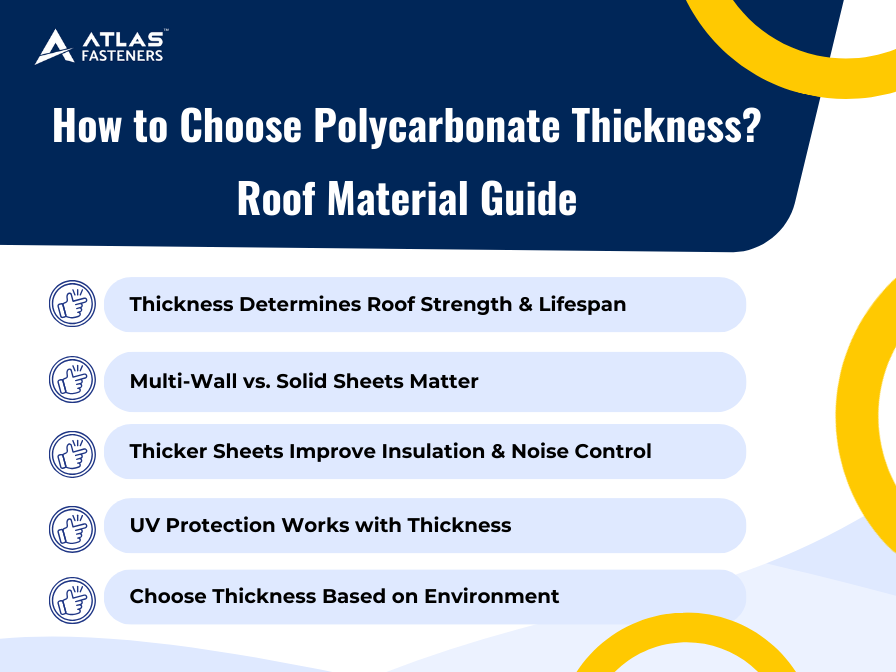
Why Thickness Is the Key to Roof Longevity
When it comes to polycarbonate roofing, thickness directly affects structural strength, wind resistance, and durability. Sheets below 4mm are prone to bending and impact damage, while 8–10mm multi-wall sheets offer stability and good transparency. Consulting a polycarbonate thickness chart helps select the right thickness for residential, commercial, or industrial roofs.
Why Polycarbonate Remains the Top Choice
Polycarbonate combines lightweight construction, high impact resistance, and exceptional transparency, making it a preferred material over glass or acrylic for modern roofs. A 6mm polycarbonate sheet can withstand impacts that would shatter a 10mm glass panel. Additionally, the material’s flexibility allows it to conform to curved rooflines without cracking, reducing installation complexity.
However, thickness enhances more than structural performance. Thicker sheets improve thermal insulation, acoustic dampening, and UV resistance. For instance, multi-wall sheets of 8mm thickness deliver better insulation than thinner solid panels while remaining cost-effective. This relationship between thickness and performance is crucial for architects and engineers designing long-lasting roofing systems.
Multi-Wall vs. Solid Sheets: Technical Considerations
Polycarbonate sheets are primarily available in multi-wall and solid types, each with distinct performance characteristics. Multi-wall sheets feature internal air pockets that act as natural insulation, providing thermal performance beyond what their nominal thickness might suggest. Solid sheets, while heavier, offer higher impact resistance and are better suited for industrial or high-traffic roofing applications.
For example, a 6mm double-wall sheet can match the thermal performance of a 10mm solid sheet, but with less weight and easier handling. Understanding the interplay between sheet type and thickness ensures optimized insulation, structural performance, and cost efficiency.
Choosing the Right Thickness for UV-Resistant Roofing
Many roofing failures are linked to UV degradation, which causes yellowing, embrittlement, and cracking over time. A sheet’s nominal thickness works in tandem with a UV-protective layer: thicker sheets naturally extend the protective effect, while thin sheets may degrade faster even if coated.
In high-sunlight regions, selecting an adequately thick sheet with high-quality UV protection is non-negotiable for longevity. Technical data from manufacturers often includes UV absorption metrics correlated with thickness, which can guide precise material selection.
Frequently Asked Questions (FAQ)
Q:What is the recommended thickness for roof PC sheets?
A:Residential roofs: 6–8mm multi-wall; commercial or industrial: 8–12mm solid sheets. Always adjust for local climate and wind load.
Q:Does thickness affect light transmission?
A:Yes. Thicker sheets slightly reduce light transmission. Multi-wall sheets maintain ~80–90% of light penetration, depending on wall configuration.
Q:How can I tell if my old panels are too thin?
A:Signs include excessive flex under weight, surface cracking, or brittleness. Sheets below 4mm generally show these issues sooner.
Q:Why do PC sheets become brittle over time?
A:Causes include insufficient thickness, UV exposure, and chemical stress. Adequate thickness with a proper UV layer prevents premature embrittlement.
Q:Can silicone be used to seal edges?
A:Yes, but ensure the sealant is compatible with polycarbonate to avoid chemical reactions that reduce lifespan.