
Latest News
- Home
- Latest News
- How to Build a Greenhouse That Lasts: Roof Design and Material Choices
2026.02.03
Latest News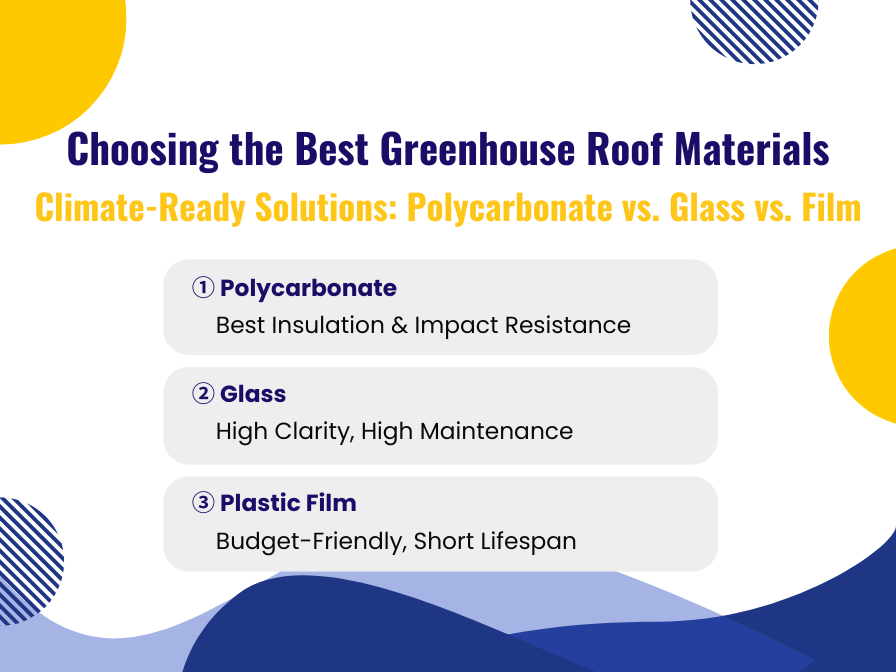
How to Build a Green House for Year-Round Use
Building a greenhouse for year-round use requires careful planning, durable materials, and smart design. When considering how to build a green house, start with the location: ensure sufficient sunlight and protection from strong winds or flooding. A solid foundation and proper drainage prevent structural damage and keep plants healthy.
Choosing the right materials is also critical. Steel frames are strong but costly, aluminum is lightweight and corrosion-resistant, while wood provides natural insulation but requires maintenance. Interior layout should allow easy access to plants and pathways for efficient daily care. Adding automated climate control, irrigation, and ventilation can help maintain optimal growing conditions year-round. Combining how to build a green house planning with durable materials and intelligent systems ensures a long-lasting, productive greenhouse.
Overview of Common Green House Roof Materials
The roof is one of the most important parts of a greenhouse, so selecting the right green house roof materials is essential. Common options include glass, polycarbonate panels, and plastic films, each offering different durability, light transmission, and insulation.
Glass provides excellent light but is heavy, fragile, and less insulating. Polycarbonate panels are lightweight, impact-resistant, and provide good insulation, making them a popular modern choice. Plastic films are cost-effective and easy to install but have shorter lifespans and lower thermal performance. Choosing the right green house roof materials affects not only durability but also internal light and temperature stability, which is key for year-round plant growth.
Glass vs Polycarbonate vs Plastic Films
Different green house roof materials have distinct advantages. Glass offers maximum light but requires strong support and careful handling. Polycarbonate is lightweight, durable, and insulating, making installation easier and maintenance minimal. Plastic films are inexpensive and quick to set up but degrade faster.
Climate considerations matter: in hot regions, polycarbonate panels help reduce heat buildup, while glass may need shading, and plastic films provide minimal temperature control. For long-term, year-round use, polycarbonate is generally the most balanced choice. Glass suits users prioritizing aesthetics and light, while plastic films work for temporary or budget-friendly greenhouses.
How Roof Materials Impact Greenhouse Roof Design
The choice of green house roof materials affects greenhouse roof design directly. Heavy glass requires reinforced structures, while polycarbonate allows flexible curved or sloped roofs to improve water runoff. Plastic films typically use simple arched or flat roofs with extra bracing.
Material properties like light transmission and insulation also influence internal temperature and plant health. Ventilation systems, including roof vents, should complement the material for airflow and heat control. Choosing the right green house roof materials along with smart greenhouse roof design ensures a durable, leak-resistant, and efficient greenhouse.
Built for Harsh Weather, Designed for Stable Temperatures
High-quality green house roof materials help greenhouses withstand extreme weather while maintaining stable temperatures. Polycarbonate panels resist impact, provide insulation, and are suitable for various climates. Glass may require reinforcement or shading.
Roof design, such as sloped structures for drainage and vents for airflow, prevents water accumulation and overheating. Proper fasteners and sealants reduce leaks and maintenance needs. Integrating automated climate, irrigation, and lighting systems helps maintain consistent conditions, ensuring plants thrive throughout the year.
Frequently Asked Questions (FAQ)
Q:Do polycarbonate panels yellow over time?
A:High-quality polycarbonate panels have UV protection to prevent yellowing, though low-quality panels may discolor over time.
Q:Can materials be mixed in one greenhouse?
A:Yes. For example, combining glass sides with a polycarbonate roof is possible, but proper sealing and support are required.
Q:How often should roof materials be replaced?
A:Polycarbonate lasts 10–15 years, glass decades (if not broken), and plastic films 3–5 years.
Q:What roof material works best in hot climates?
A:Polycarbonate panels provide light transmission while keeping greenhouse temperatures stable.