
Latest News
- Home
- Latest News
- Sandwich Panel Screw Tips-Choosing and Installing Metal Roof Self Drilling Screws
2025.12.22
Latest News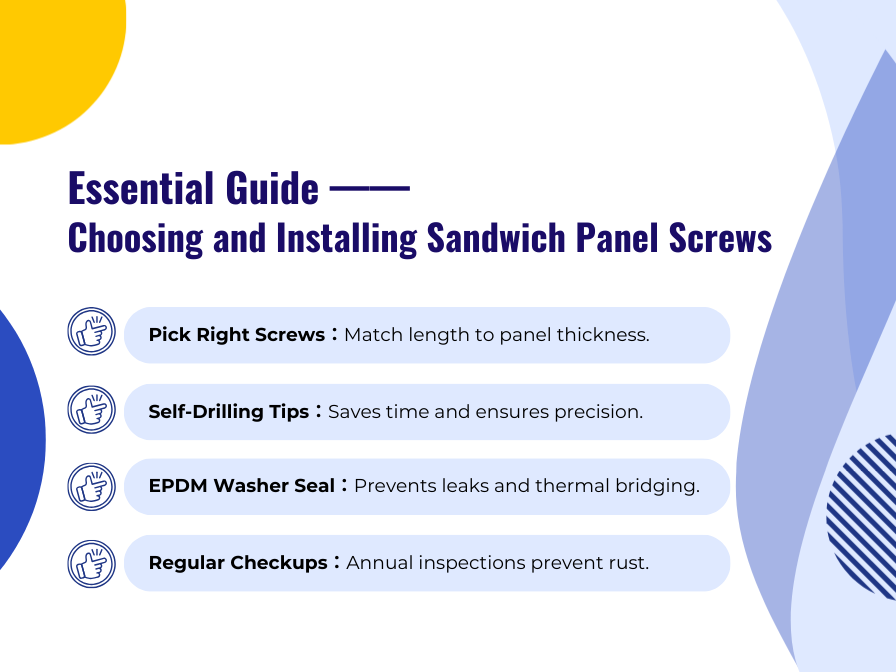
Selecting the right fasteners for metal roofs and sandwich panels is critical to ensure structural stability, weather resistance, and long-term performance. Many DIY enthusiasts and building professionals may underestimate the importance of choosing proper sandwich panel screws, metal roof screws, and self drilling screws, leading to costly repairs, leaks, and compromised roof integrity. This guide explains everything you need to know about selecting, installing, and maintaining these fasteners to achieve optimal results.
What is a sandwich panel screw and how is it different from standard screws?
A sandwich panel screw is specifically designed for installing insulated metal panels, often called sandwich panels, which consist of two metal sheets with a core of insulating material. Unlike standard screws, sandwich panel screws are engineered with a self-drilling tip, a high-strength shaft, and a sealing washer to prevent water penetration and thermal bridging. Standard screws may penetrate the panel but lack the design features to maintain a watertight seal, resist vibration, or handle thermal expansion.
The shaft material and coating are crucial for preventing corrosion, especially in outdoor and coastal environments where metal roofs are exposed to moisture, salt, and UV rays. Metal roof screws also differ from standard fasteners in terms of thread design; the threads are optimized to grip both the metal surface and the insulation core without damaging the panel layers. Self drilling screws eliminate the need for pre-drilling, which saves installation time and reduces the risk of misaligned holes that can compromise roof integrity.
Using the wrong type of fastener can lead to numerous problems. For instance, insufficient washer compression may allow water to leak into the insulation layer, causing mold, corrosion, and structural damage. Similarly, undersized or low-quality screws may loosen under thermal expansion or wind load, creating weak points along the roof. By choosing proper sandwich panel screws, builders ensure a reliable, long-lasting installation that maintains both structural strength and energy efficiency.
What Features Should I Look for in Polycarbonate Roof Screws?
Polycarbonate roofing panels and sandwich panels require specific features in their fasteners to prevent cracking, leaks, and early failure. When selecting metal roof screws or self drilling screws for polycarbonate panels, look for several key characteristics. First, the tip design should be sharp and precise to penetrate the metal sheets cleanly without splintering the polycarbonate or insulation core. Second, the screw shaft must have a corrosion-resistant coating, such as zinc, stainless steel, or an epoxy finish, which protects against rust, even in high-humidity or coastal environments.
Third, the washer is a critical component. High-quality sealing washers with EPDM or rubber cores ensure a watertight seal, reduce vibration loosening, and allow for thermal expansion and contraction. Some sandwich panel screws feature a bonded washer design to maintain compression over time, preventing gaps that can lead to water ingress. Fourth, the screw length and thread engagement should match the panel thickness and substructure, providing sufficient pull-out resistance without over-penetrating the roof deck.
Finally, consider the head type. Pan-head, hex-head, or low-profile fasteners each offer advantages depending on aesthetic preference, load distribution, and ease of installation. Proper selection of self drilling screws and washers tailored for polycarbonate roofs ensures a professional installation that minimizes maintenance and prolongs the roof's lifespan.
What Are the Most Common Installation Mistakes to Avoid?
Even with high-quality sandwich panel screws and metal roof screws, improper installation can compromise roof performance. One of the most common mistakes is incorrect spacing. Fasteners placed too far apart increase stress on the panels and can lead to sagging or leakage. Conversely, over-tightening screws or placing them too close together may damage the panel’s surface or insulation core. Following manufacturer guidelines for spacing and torque settings is essential.
Another frequent error is failing to align screws with the panel ribs or supporting purlins. Misaligned fasteners can reduce load resistance and compromise roof stability under wind or snow loads. In addition, improper washer compression or reuse of washers from previous projects can result in leaks. Pre-drilling is sometimes necessary for exceptionally thick panels, even with self drilling screws, to avoid cracking or warping.
Installing screws without corrosion protection is another major mistake. Using low-quality or untreated screws on metal roofs exposed to moisture can lead to rust and structural deterioration. Professionals always recommend high-grade metal roof screws with corrosion-resistant coatings, especially in coastal or industrial environments. Avoiding these mistakes ensures a durable, weather-resistant installation.
How Do You Know Which Fastener Fits Your Roof Best?
Selecting the right self drilling screws for your sandwich panel or metal roof requires careful consideration of panel type, roof slope, environment, and structural requirements. Begin by identifying the panel material and thickness. This determines the required screw length, thread design, and washer type. Next, consider the environmental conditions. High-humidity areas, coastal exposure, or extreme temperature fluctuations demand corrosion-resistant fasteners to prevent rust and maintain seal integrity.
The structural requirements are equally important. Fasteners must provide adequate pull-out and shear strength to resist wind uplift, vibration, and thermal expansion. Sandwich panel screws and metal roof screws designed for these conditions often undergo testing for load capacity, corrosion resistance, and washer performance. Consulting manufacturer specifications and installation guides ensures the correct fastener is used, preventing long-term failures and warranty issues.
Additionally, aesthetics and ease of installation should not be overlooked. Choosing the correct head style, color, and length improves the overall appearance and simplifies the installation process, especially for visible roof sections. Proper selection of self drilling screws tailored to your panel type and roof design ensures a reliable, professional-quality installation.
How Often Should You Inspect and Maintain Your Fasteners?
Regular inspection and maintenance of sandwich panel screws and metal roof screws are critical to prolonging the life of your roof. Experts recommend checking fasteners at least annually and after major storms or extreme weather events. Look for signs of corrosion, washer compression loss, or loose screws. Even high-quality self drilling screws can degrade over time due to environmental exposure, vibration, and thermal cycling.
Maintenance includes tightening loose screws, replacing damaged or rusted fasteners, and ensuring washers remain properly seated. In some cases, it may be necessary to remove and replace old screws with updated corrosion-resistant metal roof screws to prevent leaks or structural compromise. Documenting inspection results and scheduling periodic maintenance helps prevent costly repairs and extends the roof’s operational lifespan.
By adhering to a regular inspection schedule and promptly addressing any fastener issues, homeowners and builders can ensure their sandwich panel roofs remain watertight, structurally sound, and visually appealing for many years.
Frequently Asked Questions (FAQ)
Q:Do I need self drilling screws for all sandwich panel installations?
A:Most installations benefit from self drilling screws, as they save time and reduce errors. Pre-drilling is only needed for very thick or specialty panels.
Q:How far apart should sandwich panel screws be spaced?
A:Typically 300–500 mm along panel ribs, with closer spacing at edges. Correct spacing ensures stability, reduces vibration, and maintains waterproofing.
Q:Should I pre-drill holes for sandwich panel screws?
A:High-quality self drilling screws usually don’t need pre-drilling. Pre-drill only for thick panels or hard materials to prevent cracking.
Q:How often should I inspect my sandwich panel screws?
A:Inspect at least annually and after storms. Check for loose screws, rust, or worn washers, and replace any damaged metal roof screws promptly.
Q:How do I prevent screws from rusting on metal roofs?
A:Use corrosion-resistant self drilling screws or metal roof screws with zinc, stainless steel, or epoxy coatings. Ensure washers are properly seated and maintain regularly.
Further reading:
Top 5 Mistakes When Choosing Roofing Fasteners for Polycarbonate Roofs
How to Fix Polycarbonate Roofing:Step-by-Step Leak-Proof Guide
How to Choose Polycarbonate Thickness? Roof Material Guide
Stop Skylight Leaks during rainy days
Bunnings Roof Screws vs Professional Roof Screws: Which to Use?
How to Prevent Rust and Corrosion on Stitching Screws and Roofing Fasteners
How to Inspect and Avoid Over-Torqued Self Drilling Screws on Roofs