
Latest News
- Home
- Latest News
- Differences Between Tek Screws and Self Drilling Screws for Metal & Heavy Duty Installation Tips
2025.10.13
Latest News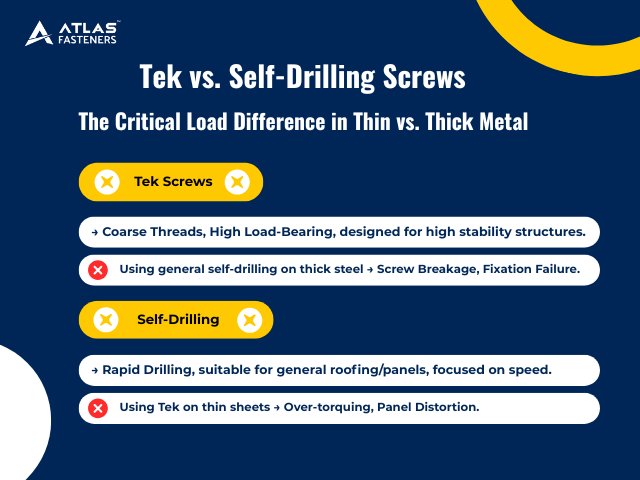
In metal construction, steel roof installation, and industrial machinery fabrication, choosing the right screws is crucial. With increasing project demands, traditional screws are gradually being replaced by tek screws and self-drilling screws for metal, while heavy-duty self-drilling metal screws have become the preferred choice for applications requiring high load-bearing capacity and durability.
What Are Tek Screws and Which Projects Are They Suitable For?
Tek screws are self-drilling screws that combine a drill-tip with threaded design, typically featuring the following characteristics:
◆ Features of Tek Screws
- Self-drilling capability: The tip is designed like a drill bit, allowing direct penetration of metal sheets without pre-drilling.
- High load capacity: Deep and precise threads provide strong tensile and shear strength.
- Fast installation: Eliminates extra drilling steps, saving time.
- Multiple head types available: Hex, Phillips, and flat heads for different tools and applications.
◆ Suitable Applications
- Metal roof installation and steel frame assembly
- Assembly of thick steel, galvanized steel, or aluminum sheets
- Installation of heavy machinery or equipment
- Construction of industrial and warehouse shelving
Due to their self-drilling and high-load capabilities, tek screws are ideal for projects that require quick, secure fastening of thick metal sheets or load-bearing structures.
Key Factors to Consider When Selecting Tek Screws
When choosing tek screws, contractors must consider screw material, length, head type, and thread design to ensure safe installation and structural stability.
◆ Selection Guidelines
Material
- Stainless steel: Corrosion-resistant, ideal for outdoor or humid environments.
- Galvanized carbon steel: More cost-effective, suitable for indoor or low-corrosion settings.
Screw Length
- Should be at least 1.5–2 times the thickness of the material to ensure secure fastening
Thread Design
- Coarse threads: Suitable for thick sheets and steel.
- Fine threads: Suitable for thin sheets or easily deformable materials.
Head Type
- Hex head: Ideal for power tools, provides high torque.
- Phillips or flat head: Suitable for manual fastening or detailed work.
Waterproof Washers
- For roofing or outdoor projects, using EPDM waterproof washers prevents water leakage and corrosion
Choosing the right tek screws ensures optimal performance in heavy-duty metal projects and avoids structural failures or construction delays due to improper screw selection.
What Are Self Drilling Screws for Metal and Their Advantages?
Self drilling screws for metal are specially designed for metal sheets, featuring a drill-like tip that can penetrate metal directly without pre-drilling. The main difference from tek screws lies in thread design and load-bearing capacity.
◆ Characteristics of Self Drilling Screws for Metal
- No pre-drilling required: Thin metal sheets can be fastened directly, saving installation time.
- Variety of materials: Available in stainless steel or galvanized steel to meet different weather-resistance needs.
- Easy installation: Compatible with electric screwdrivers for quick fastening.
- Moderate load capacity: Suitable for medium-thickness metal sheets and general construction projects.
◆ Difference from Tek Screws
- Tek screws have higher load-bearing capacity, coarser threads, and are suitable for thick metal sheets.
- Self drilling screws for metal are ideal for thin to medium-thickness metal sheets, offering faster and more convenient installation.
For applications requiring heavy duty self drilling metal screws, such as thick steel roofing or large steel structures, tek screws are recommended to ensure maximum safety and structural integrity.
How to Properly Install Self Drilling Screws for Metal
Installing self drilling screws for metal or tek screws is more than just driving screws in. Correct installation improves holding strength, extends lifespan, and reduces the risk of screw stripping or metal deformation.
◆ Installation Tips
➤ Choose the right screw length and material
- Length should be 1.5–2 times the thickness of the metal sheet.
- Select material based on environment (indoor/outdoor, corrosion resistance).
➤ Control speed and pressure
- Too fast may strip threads; too slow increases installation time.
- Match torque to screw size when using power tools.
➤ Drive screws vertically
Keep screws perpendicular to the metal sheet to avoid uneven torque and panel deformation.
➤ Plan proper screw spacing
Reinforce corners and load-bearing beams; spacing can be wider in the center of panels.
➤ Use washers or waterproof gaskets
For roofing or outdoor projects to prevent water leakage and corrosion.
➤ Regular inspection
Check screws every six months for looseness, rust, or worn washers
Following these techniques ensures self drilling screws for metal maintain structural stability and meet construction safety standards, whether used on medium-thickness sheets or heavy steel panels.
Frequently Asked Questions (FAQ)
Q:How to choose heavy duty screws suitable for thick metal sheets?
A:
- Prioritize tek screws with coarse threads and high load capacity.
- Recommended materials: stainless steel or high-strength galvanized steel.
- Length should penetrate at least 1.5–2 times the thickness of the metal sheet.
Q:How thick of a metal sheet can self drilling screws for metal handle?
A:
- Generally suitable for direct installation into 0.5–6 mm thin sheets.
- For thicker sheets, pre-drill a pilot hole or use heavy-duty tek screws.
Q:Do Tek screws require pre-drilling?
A:
- Thin sheets usually do not require pre-drilling.
- Thick steel or hard materials should be pre-drilled to prevent screw breakage or thread stripping.
Q:How often should self drilling screws be inspected after installation?
A:
-
Recommended every six months, especially for outdoor or load-bearing projects.
-
Check for looseness, rust, or worn washers.
Q:What should be considered when using an automatic screw gun with Tek screws?
A:
- Ensure screws are properly aligned to avoid jams.
- Control speed and pressure to prevent screws from tilting.
- Clean the gun tip regularly to maintain smooth screw feeding.
Whether it’s a steel roof, metal framework, or heavy machinery, choosing the right tek screws or self drilling screws for metal, and mastering the installation techniques of heavy duty self drilling metal screws, ensures both construction safety and efficiency.
Further reading:
Type 17 Timber Screws: Ideal Choice for Wood Applications
Collated Screws Explained — Faster Installation, Less Effort
Bugle Screws vs Plasterboard Screws — Which Should You Use?
What Are Self-Drilling Screws and How Do They Work?
Top Colorbond Roofing Screws: Cyclone Rated & Self Drilling
Collated Screws vs Self Tapping Screws: How to Choose the Right Screws
Tek Screws for Steel & Wood to Metal: Common Installation Mistakes