
Latest News
- Home
- Latest News
- Collated Screws vs Self Tapping Screws: How to Choose the Right Screws
2025.09.30
Latest News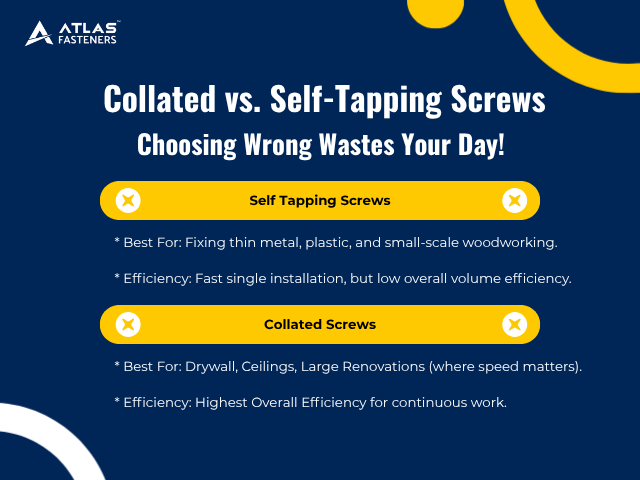
In modern construction and renovation projects, screws (screws) are an indispensable fastening material. However, when you visit a hardware store or search for construction tools, you will often encounter the terms collated screws and self tapping screws, which can be confusing. So, what exactly is the difference between these two types of screws, and when should you use each? This article professionally explains the features, applications, and selection tips for collated screws and self tapping screws, helping you fully understand them.
What Are Collated Screws? Suitable Construction Scenarios
Collated screws, as the name suggests, are arranged in strips and typically held together with plastic or paper strips, making them easy to load directly into a screw gun for fast fastening. The main advantage of this design is significantly improved construction efficiency, especially for large-scale operations or scenarios requiring a high volume of screws, such as woodworking, interior decoration, ceiling joist installation, and even roof aluminum panels or drywall installation.
Features of Collated Screws:
- Increased Efficiency: Multiple screws can be installed consecutively, eliminating the need to manually insert each screw.
- Stable Positioning: When used with a screw gun, it’s easier to control screw angles and depth, reducing errors.
- Suitable for Large-Scale Construction:Multiple screws can be loaded at once, making them ideal for large projects or interior renovations.
In summary, if you are a carpenter, interior decorator, or facing scenarios that require fast, high-volume screw installation, collated screws are a time-saving and labor-saving choice.
What Are Self Tapping Screws? Why No Pre-Drilling?
Unlike collated screws, self tapping screws are designed with “self-threading” tips. This means the screw tip can cut into the material to form threads on its own, so in many cases, pre-drilling is not required.
Features of Self Tapping Screws:
- Self-Threading Design: The screw tip cuts into the material, allowing it to be fastened directly into wood, plastic, or thin metal sheets.
- Easy Installation: Reduces the need for additional tools such as drills or drill bits for pre-drilling.
- Suitable for Small to Medium Projects:Ideal for fastening thinner metal sheets, wood panels, or plastic parts.
However, it’s important to note that not all materials can be used directly with self tapping screws. For example, thick steel plates or very hard materials may still require pilot holes to prevent screw breakage or material damage.
Collated Screws vs Self Tapping Screws: Key Differences
To make it clear, here is a comparison of the main differences in their use:
| Feature | Collated Screws | Self Tapping Screws |
| Primary Function | Fast consecutive fastening | Self-threading, no pre-drilling |
| Construction Efficiency | High, suitable for large-scale work | Moderate, slower per screw |
| Tools Required | Screw gun | Electric screwdriver or manual driver |
| Suitable Materials | Wood, drywall, ceiling joists, etc. | Wood, thin metal sheets, plastic |
| Pre-Drilling Needed? | Depends on material, generally can use with screw gun | Usually not needed, but required for hard materials |
| Precision Control | High, depth can be set | Depends on manual control |
In short, collated screws focus on efficiency and continuous operation, while self tapping screws emphasize convenience and pre-drill-free fastening. In large-scale projects or woodworking and interior decoration, these two types of screws can complement each other.
3 Key Considerations When Choosing Screws: Efficiency, Material, Tool Compatibility
When selecting the right screws, you should consider three factors beyond basic differences:
1. Construction Efficiency
For large projects requiring continuous screw installation, collated screws with a screw gun are the best choice, saving significant time. For small repairs or single-screw tasks, self tapping screws are sufficient.
2. Material Compatibility
- Wood and drywall: Both collated screws and self tapping screws are suitable, but collated screws are faster.
- Thin metal sheets and plastics: Self tapping screws are more convenient and can be installed without pre-drilling.
- Thick steel or hard plastics: Both may require pilot holes; always confirm material and screw specifications.
3. Tool Compatibility
- Collated screws require a dedicated screw gun; without it, the efficiency advantage is lost.
- Self tapping screws can be operated manually or with an electric screwdriver, requiring fewer tools.
Frequently Asked Questions (FAQ)
Q:Can collated screws be installed manually?
A: Technically yes, but collated screws are designed for fast installation with a screw gun. Manual installation reduces efficiency and may be hindered by the plastic strip, so it’s not recommended.
Q: Do self tapping screws really not need pre-drilling? Can they be used directly on metal?
A: In most cases, self tapping screws can be directly installed in wood, plastic, or thin metal sheets. However, for thick steel or hard metals, it’s recommended to drill pilot holes to avoid screw breakage or material damage.
Q: Which is better for large-scale projects: collated screws or self tapping screws?
A: Collated screws are clearly better, as they can be installed consecutively with a screw gun, making them far more efficient than individual self tapping screws.
Q: Which materials cannot use self tapping screws?
A: Extremely hard steel, thick metal sheets, and some high-hardness plastics are not suitable for direct use with self tapping screws. Pilot holes or specialized screws are required.
Q: What sizes of collated screws are available? Can they get stuck in the screw gun?
A: Collated screws come in a wide range of sizes, from small wood screws to construction screws over 75mm in length. Ensure the screw gun is compatible with the screw size to avoid jamming or installation issues.
Choosing the Right Screws Doubles Your Efficiency
In summary, collated screws and self tapping screws each have advantages:
- Collated screws: Prioritize efficiency and continuous installation for large-scale work.
- Self tapping screws: Focus on convenience and pre-drill-free installation, suitable for small to medium projects.
In practice, choose screws based on project scale, material characteristics, and tool compatibility. In some cases, using both types in the same project achieves optimal results.
If you’re planning interior decoration, woodworking, or metal fastening projects, understanding the differences between these screws will save you time, effort, and make your work more professional. Check out our screw buying guide now to select the right screws for your project, double your efficiency, and ensure better quality!
Further reading:
Self-Drilling Screws vs Self-Tapping Screws — Key Differences
How to Use Self Drilling Screws and Collated Screws
Differences Between Tek Screws and Self Drilling Screws for Metal & Heavy Duty Installation Tips