
Latest News
- Home
- Latest News
- Choosing Bugle, Plasterboard and Type 17 Timber Screws
2025.10.08
Latest News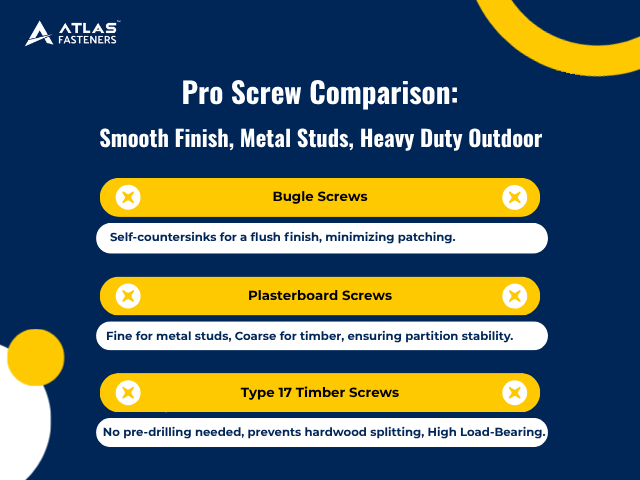
In the construction and renovation industry, every screw plays a role in determining the stability and durability of a structure. Whether you are working on plasterboard partitions, woodworking projects, or outdoor timber structures, choosing the right screw is more important than you might think. This article will guide you through the features, applications, and selection tips for bugle screws, plasterboard screws, and type 17 timber screws, helping you make the right choice for your projects.
Bugle Screws: The Professional Choice for Smooth Surfaces
Bugle screws are well-known for their unique trumpet-shaped head, which allows the screw to sink completely into plasterboard or timber surfaces without causing cracks or bulges. This ensures a smooth finish for plastering and painting, making them a favorite among carpenters and contractors.
-
Applications: Plasterboard partitions, woodworking, and light partition works.
-
Advantages: Quick installation, minimal surface damage.
-
Recommended material: Carbon steel for indoor use; stainless steel or galvanized versions for humid or outdoor environments.
If surface smoothness is your top priority, bugle screws are almost irreplaceable.
Common Sizes and Material Comparisons
The durability of your project depends directly on screw material and size:
-
Carbon steel bugle screws / plasterboard screws → Affordable and ideal for indoor use.
-
Stainless steel type 17 timber screws → Highly rust-resistant, perfect for outdoor or humid conditions.
-
Black phosphate-coated plasterboard screws → Common in plasterboard installation, offering good rust resistance.
Sizes typically range from 25mm to 150mm, making them adaptable to different project needs.
Plasterboard Screws: Essential for Drywall Installation
Plasterboard screws are specifically designed to fasten plasterboards to framing, ensuring secure attachment and preventing cracks or loosening.
- Coarse thread type: Best for timber studs; strong grip and quick drive-in
- Fine thread type: Best for metal studs; provides reliable hold in thin steel structures.
For anyone working on interior partitions, plasterboard screws are a must-have.
Type 17 Timber Screws: The Best Partner for Outdoor Woodwork
In outdoor timber projects, the biggest challenge is rust and loosening due to weather. Type 17 timber screws come with a self-drilling point that prevents timber splitting and eliminates the need for pre-drilling. They can be driven directly, greatly improving efficiency.
- Suitable for: Hardwood, softwood, and plywood.
- Common uses: Decking, fencing, outdoor furniture, and timber framing
- Recommended material: Galvanized or stainless steel for long-term corrosion resistance.
For projects exposed to sun, rain, and harsh conditions, type 17 timber screws are the most reliable choice.
How to Choose the Right Screw?
- Indoor plasterboard projects → Plasterboard screws
- Woodworking that requires smooth surfaces → Bugle screws
- Outdoor timber and structural projects → Type 17 timber screws
In short, always consider the environment and materials first. Choosing the right screw ensures both safety and aesthetics.
Frequently Asked Questions (FAQ)
Q: Can these three types of screws be used interchangeably?
A: Not recommended. Bugle screws are suitable for woodwork and plasterboard, plasterboard screws are designed specifically for plasterboard and studs, while type 17 timber screws are intended for structural timber. Using them interchangeably may result in loose fittings or reduced durability.
Q: Which screw is best for outdoor use?
A: Type 17 timber screws are the best choice, especially when made with stainless steel or galvanized coating. They offer excellent rust and corrosion resistance, making them ideal for long-term outdoor applications.
Q: How much weight difference can these screws handle?
A: Type 17 timber screws have the highest load-bearing capacity, suitable for structural timber projects. Bugle screws provide medium strength for wood and panel fastening. Plasterboard screws have the lowest load capacity and are only meant for plasterboard walls, not for structural support.
Q: What’s the difference between bugle screws and plasterboard screws?
A: Bugle screws are more versatile, designed to provide a flush finish for wood and boards. Plasterboard screws are specialized for plasterboard, with coarse threads for timber studs and fine threads for metal studs.
Q: Do I need to pre-drill holes before installation?
A: In most cases, no. Plasterboard screws and bugle screws can be driven directly in. Type 17 timber screws feature a self-drilling tip, so pre-drilling is unnecessary. However, for very hard timber, pre-drilling may help reduce effort and prevent splitting.
Further reading:
Tired of Loose Metal Fixes? Use Heavy Duty Tek Self-Drilling Screws!
Sandwich Panel Screw vs Stitching Screws: Roofing Fasteners Guide
How to Choose Screws for Wind-Resistant Greenhouses | Roof Design Tips
How to build a green house?Green House Roof Materials Choose