
Latest News
- Home
- Latest News
- How to build a green house?Green House Roof Materials Choose
2025.10.13
Latest News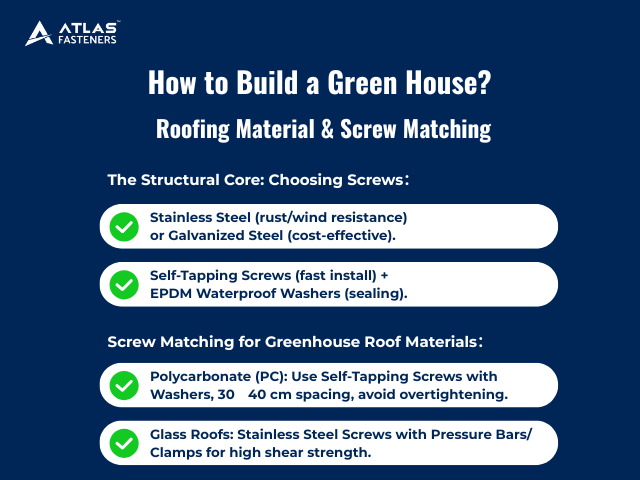
Building a sturdy and durable greenhouse requires not only careful design planning but also the right choice of materials and fastening methods. Many people searching for how to build a greenhouse often overlook one key detail: the selection of screws and how roof materials are secured. In fact, the material, type, and installation method of screws directly affect the greenhouse’s wind resistance, structural stability, and overall lifespan.
What Screws Should You Use for Building a Greenhouse? Which Materials Are Most Durable?
When learning how to build a greenhouse, screws are the core of every connection point. Choosing the right screws keeps your greenhouse stable under strong winds, rain, and sun, while extending its lifespan.
Recommended Screw Materials
Stainless Steel Screws
Highly rust- and corrosion-resistant, ideal for long-term outdoor use.
Strong against wind pressure and unlikely to break.
Galvanized Steel Screws
More cost-effective, with moderate weather resistance. Suitable for inland or low-wind areas.
Self-Tapping Screws
Can penetrate metal or plastic panels directly, allowing fast installation without pre-drilling.
Tips for Choosing Screws
- Match the screw head type (flat, hex, or drill-tip) to your roof material.
- Use waterproof washers (EPDM) to prevent water leakage.
- For wooden frames, use wood screws; for aluminum or steel frames, self-tapping screws are preferred.
Choosing the right screws not only improves structural safety but also reduces future maintenance costs.
Greenhouse Roof Materials: Which Screws Are Needed for Different Roof Types?
Greenhouse roofs come in various materials, commonly polycarbonate sheets, glass panels, and PVC or transparent plastic sheets. Each material has specific requirements for screw selection and installation.
1. Polycarbonate Sheets
Recommended screws: Self-tapping screws with waterproof washers
Installation tips: Avoid overtightening to prevent cracking; screw spacing is generally 30–40 cm.
2. Glass Roofs
Recommended screws: Stainless steel screws with pressure bars or specialized clamps
Installation tips: Use at least two screws plus a pressure bar at each junction to prevent sliding or wind displacement.
3. PVC / Transparent Plastic Sheets
Recommended screws: Self-tapping screws with plastic washers
Installation tips: Sheets are softer; maintain 25–35 cm spacing and apply even pressure during fastening.
Choosing the correct screws for different greenhouse roof materials directly affects wind resistance and durability, so always confirm fastener specifications before selecting materials.
Putting a Roof on a Pergola: How to Safely Install with Screws
Beyond greenhouses, many homeowners add transparent or semi-transparent roofs to pergolas. When putting a roof on a pergola, screw selection and installation are just as important for stability and safety.
Screw Selection
Wooden pergolas: Wood screws or hex-head screws with washers
Aluminum or steel pergolas: Self-tapping screws or stainless steel screws
Installation Tips
Pre-drill holes before screwing to prevent splitting wood or plastic panels.
Use washers to distribute pressure and avoid material damage.
Stagger screws diagonally to increase torsional resistance and prevent loosening from wind.
Regular inspections: Check all fastened points at least every six months, as pergola roofs are exposed to wind.
Whether it’s a greenhouse or a pergola, proper screw installation is critical to the overall structural stability.
How to Maintain Greenhouse Roof Screws
Even high-quality screws require regular maintenance to ensure longevity and prevent roof loosening or leaks.
Maintenance Tips
- Regular inspections: Check for loose screws, rust, or aging washers.
- Clean screw surfaces: Rainwater and dust buildup can cause corrosion.
- Replace damaged screws: Immediately replace any rusted or broken screws.
- Use thread locker: Prevent screws from loosening due to long-term vibration.
Simple maintenance can greatly improve the safety and durability of greenhouse or pergola roofs, protecting against wind and rain damage.
Frequently Asked Questions (FAQ)
Q: What screws should be used for building a greenhouse?
A:It’s recommended to use stainless steel self-tapping screws with waterproof washers, providing both durability and ease of installation.
Q: What is the safe spacing for greenhouse roof screws?
A:
- Polycarbonate sheets: 30–40 cm
- Glass panels: At least 2 screws per junction
- PVC sheets: 25–35 cm
Adjust spacing based on roof material and wind conditions.
Q:Which screws are most secure for polycarbonate sheets?
A:Use self-tapping screws with EPDM waterproof washers to evenly distribute pressure and prevent panels from lifting in the wind.
Q: What should DIY pergola roof screws consider?
A:Pre-drill holes to avoid cracking, use washers to distribute pressure, stagger screws diagonally, and perform regular inspections.
Q:Do screws need maintenance after installation?
A:Yes. Inspect screws every six months for looseness or rust, and replace or add thread locker as needed to maintain stability.
Whether you’re learning how to build a greenhouse yourself or putting a roof on a pergola in your backyard, choosing the right screws and understanding how to secure different greenhouse roof materials are key to a successful and stable structure.
Further reading:
Tek Screws: Match Drill Point & Wing to Metal Gauge for Strength
Self-Drilling Screws vs Self-Tapping Screws — Key Differences
How to Use Self Drilling Screws and Collated Screws
Differences Between Tek Screws and Self Drilling Screws for Metal & Heavy Duty Installation Tips