
Latest News
- Home
- Latest News
- How to Use Self Drilling Screws and Collated Screws
2025.10.13
Latest News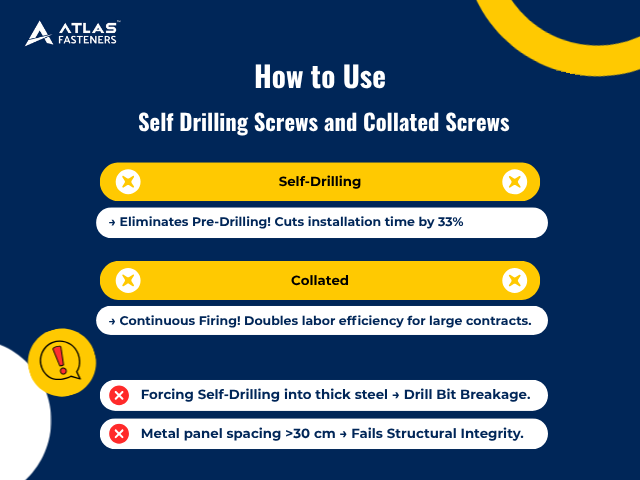
What Are Collated Screws and Where Are They Used?
Collated screws are screws arranged on tape or plastic strips, designed for use with automatic screw guns, greatly improving construction efficiency, especially for large-area projects.
Features
- Automated installation: Fast and continuous screwing
- Precise placement: Consistent depth for every screw
- Reduces manual fatigue
- Suitable materials: Wood, gypsum board, steel, aluminum
Applications
- Building exterior walls or steel structures
- Large-scale woodworking panel installation
- Gypsum board ceilings
- Metal roof installation
Differences Between Self Drilling Screws and Regular Screws
Self drilling screws have a drill-point tip, allowing them to penetrate metal directly without pre-drilling.
| Type | Features | Suitable Materials | Pre-Drilling Required ? |
| Regular screws | Requires pre-drilling | Wood, plastic, thin metal | Yes |
| Self drilling screws | Drill-point, self-drilling | Steel, aluminum, thick metal | No (thin sheets can be screwed directly) |
| Collated screws | Arranged on strip, compatible with auto screw guns | Wood, metal, gypsum board | Depends on material |
Self drilling screws are ideal for large projects or fast construction, saving time and ensuring safety.
What to Pay Attention to When Installing Self Drilling Screws
Although self drilling screws do not require pre-drilling, proper techniques and precautions are still essential to ensure structural stability and prevent screw stripping or material damage.
Installation Tips:
Choose the right screw size and material
-
Material: Stainless steel or galvanized steel for rust and corrosion resistance
-
Length: Should penetrate at least 1.5–2 times the panel thickness to ensure secure fastening
Control driving speed and pressure
-
Too fast can strip threads or damage materials
-
Too slow increases installation time
Keep screws perpendicular to the surface
- Prevents screws from tilting and ensures even shear distribution
Use washers or sealing washers as needed
- Protects material surfaces and improves sealing and weather resistance
Check material thickness and hardness
- For thick steel, pre-mark screw positions to ensure smooth penetration
By following these guidelines, self drilling screws save time while ensuring the stability and safety of metal structures.
How to Plan Screw Spacing for Maximum Structural Stability
Besides screw type, screw spacing is a crucial factor affecting structural stability. Too wide a spacing reduces fastening strength, while too close increases cost and complicates installation.
Recommended Spacing:
- Thin steel or aluminum sheets: 20–30 cm between screws.
- Wood or wooden panels: 30–40 cm between screws.
- Gypsum board or thin plastic sheets: Around 20 cm between screws.
- Critical connection points: Corners, intersections, or load-bearing beams should have denser screw placement.
Proper spacing allows self drilling screws and collated screws to achieve optimal holding power, preventing material stress concentration, cracking, or deformation.
Frequently Asked Questions (FAQ)
Q: What should I do if self drilling screws strip during installation?
A:
- Make sure the screw material matches the sheet thickness.
- Control the driving speed and keep the screw perpendicular.
- For thick steel sheets, mark the spot with a punch before drilling.
Q: Do self drilling screws require pre-drilling?
A:
- Thin metal sheets usually do not require pre-drilling.
- For thick or hard materials, drill a pilot hole to prevent stripping or screw breakage.
Q: What are some tips for using collated screws with an automatic screw gun?
A:
- Ensure the screw strip is properly aligned to prevent jams.
- Control the machine’s speed and pressure to avoid crooked screws.
- Regularly clean the gun tip to ensure smooth feeding.
Q: How often should screws be inspected after installation?
A:
- Check every six months, especially for outdoor or high-load projects.
- Inspect for looseness, rust, or aging washers.
Q: Which screws are best for wood, metal, or gypsum board?
A:
- Wood: Wood screws or hex-head screw.
- Metal: Self drilling screws (use pilot holes for thick sheets).
- Gypsum board: Collated screws with a dedicated screw gun.
Further reading:
What Are Self-Drilling Screws and How Do They Work?
Top Colorbond Roofing Screws: Cyclone Rated & Self Drilling
Collated Screws vs Self Tapping Screws: How to Choose the Right Screws
Tek Screws for Steel & Wood to Metal: Common Installation Mistakes