
Latest News
- Home
- Latest News
- What Are Self-Drilling Screws and How Do They Work?
2025.11.17
Latest News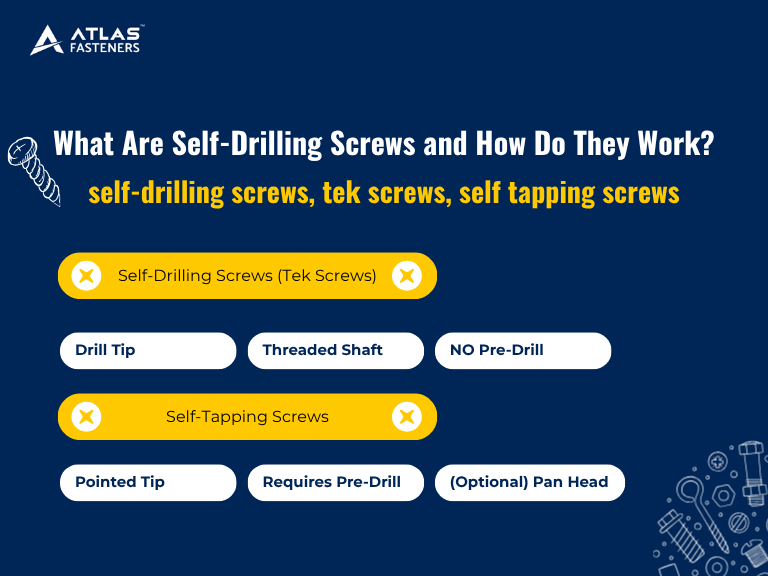
Self-drilling screws, also commonly referred to as tek screws, are an essential fastener in modern construction. They combine drilling and fastening functions in a single step, significantly saving time and effort compared to traditional screws. Understanding their design and functionality is crucial for choosing the right screw for your project.
What Are Self-Drilling Screws?
Self-drilling screws are screws with a drill-shaped tip that allows them to penetrate materials without the need for pre-drilling. Unlike conventional screws, which require a separate drilling operation, self-drilling screws can create their own hole and secure materials in one action. This feature makes them widely used in metalworking, wood, and composite materials.
Structure and Design Features
The typical structure of a self-drilling screw includes:
- Drill Tip – Shaped like a small drill bit, it penetrates the material efficiently.
- Threaded Shaft – Ensures strong holding power once the screw is embedded.
- Head – Available in various designs such as pan head, hex head, or flat head to match different applications.
- Material and Coating – Usually made of hardened carbon steel with corrosion-resistant coatings such as Class 3 or Class 4 Mechanical Zinc plating.
The combination of these features allows self-drilling screws to work efficiently, reducing installation time and minimizing the risk of failures.
How Do Self-Drilling Screws Work?
Self-drilling screws operate through a simple yet effective process:
- The drill tip penetrates the surface material, acting like a mini drill bit.
- As the screw rotates, the threads cut into the material, creating a secure grip.
- Once fully inserted, the head sits flush or slightly above the surface, depending on the screw design.
Because they drill and fasten simultaneously, self-drilling screws are ideal for metal-to-metal, metal-to-wood, or composite applications, eliminating the need for pre-drilled pilot holes.
Self-Drilling Screws vs Self-Tapping Screws
While self-drilling screws and self-tapping screws are often mentioned together, they are not exactly the same:
- Self-Drilling Screws: Have a drill-like tip; no pilot hole is needed. Best for metals and harder materials.
- Self-Tapping Screws:Require a pre-drilled hole; the screw cuts its own threads into the hole. Often used for plastics and softer materials.
Knowing the difference helps ensure proper installation and avoids damaging the materials.
Frequently Asked Questions (FAQ)
Q: What materials can self-drilling screws be used on?
A: They are suitable for metals like steel, aluminum, and thin stainless steel, as well as some composite materials.
Q: Are tek screws the same as self-drilling screws?
A: Yes, “tek screws” is a common brand-name term often used interchangeably with self-drilling screws.
Q: How do I choose the right size of self-drilling screw?
A: Consider the material thickness, screw diameter, thread type, and head style to ensure secure fastening without damaging the material.
Q: Can self-drilling screws be reused?
A: Generally, self-drilling screws are designed for one-time use, as removing them may damage the threads or drill tip.
Q: Do self-drilling screws need washers?
A: Washers are optional but can help distribute pressure evenly, especially when fastening soft materials or thin metal sheets.
Further reading:
Type 17 Timber Screws: Ideal Choice for Wood Applications
Collated Screws Explained — Faster Installation, Less Effort