
Latest News
- Home
- Latest News
- Top Colorbond Roofing Screws: Cyclone Rated & Self Drilling
2025.09.30
Latest News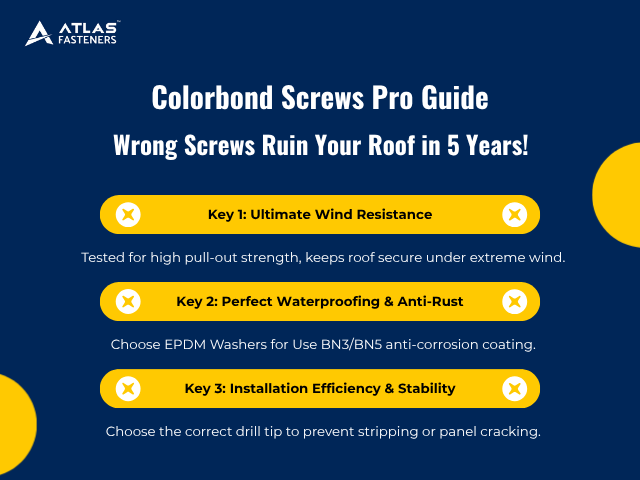
When it comes to metal roofing projects, selecting the right fasteners is critical. It is crucial the performance and corrosion resistance of the fasteners used to fix cladding and accessory materials have the same or superior service life as the Colorbond steel roofing, and the substrates they are affixed to, with which they are to be used. Using screws without matching performance can lead to rust, leaks, or loose fixing. Therefore, high-quality colorbond roofing screws not only ensure long-term durability but also withstand extreme weather conditions.
Why Colorbond Roofs Need Specialized Screws
Colorbond roof sheets are made of a combination of aluminium/zinc/magnesium alloy-coated steel substrate with a range of factory applied high-durability coating systems to provide corrosion resistance and cope with the exposure to various environments.
Depending on the application, internal activities and external environment of the building such as heavy dust, emissions fallout, contact with heat, moisture, corrosive chemicals or acids etc, using general-purpose screws may lead to insufficient corrosion protection and lead to the following issues:
- Galvanic Corrosion: General purpose screws with washers that contain significant levels of carbon black fillers will be conductive and induce chemical reactions between the coating and steel substrates, leading to rusts.
- Leaks: Improper washer material, insufficient torque, over-driven or skewed fixings may all lead to inadequate sealing, resulting in leakage.
- Loose Screws: Screws unable to accommodate expansion and contraction may loosen over time.
Using specialized colorbond roofing screws is essential to protect the roof and extend its lifespan.
What Are Cyclone Rated Roofing Screws?
In extreme weather, such as cyclones or tornadoes, roofs experience higher tensile and shear forces. Cyclone rated roofing screws are designed for such conditions and have been rigorously tested to withstand intense wind pressure and vibrations.
Definition and Standards
- Cyclone Rated screws meet international or local standards (e.g., AS/NZS 1170.2) to ensure roof stability under high winds.
- Testing includes pull-out strength, shear resistance, and long-term corrosion tests.
Applications
- Residential roofs in coastal or cyclone-prone areas
- Industrial and commercial metal roofs
- High-wind zones requiring enhanced waterproofing
Using cyclone rated roofing screws significantly reduces roof damage risks and ensures building safety.
How to Choose Self Drilling Screws for Colorbond Roofs
Selecting the right self drilling screws for Colorbond roofing affects both durability and installation efficiency. Key considerations include:
1. Screw Structure
Self drilling screws feature a drill tip that penetrates metal panels without pre-drilling, ensuring fast and secure fastening.
2. Drill Tip Type
Different drill tips are suitable for various steel thicknesses. Choosing the correct tip prevents slipping or panel cracking.
3. Thread Design
Thread patterns influence holding power and vibration resistance. Screws designed for Colorbond roofs balance pull-out strength and stability.
4. Washer Selection
EPDM or rubber washers provide excellent sealing and accommodate thermal expansion of steel panels.
5. Head Type
Common head types include flat, pan, or hex heads. Head choice should match tools, maintain aesthetics, and ensure proper sealing.
6. Coating and Corrosion Resistance
High-quality coatings like BN3/BN5 extend screw lifespan, ideal for coastal, humid, or rainy regions.
Project Case Study
In a coastal residential project, the construction team used cyclone rated roofing screws with Colorbond panels and self drilling screws with EPDM washers. The installation was quick and stable. After experiencing a cyclone, the roof remained intact with no leaks or loose screws. This case highlights the importance of choosing the right screws for roof durability.
Frequently Asked Questions (FAQ)
Q:What head type should I choose for Colorbond roofing screws?
A: The head type should match your tools. Flat or pan heads are common for residential roofs, providing both aesthetics and sealing.
Q:How do cyclone rated roofing screws differ from ordinary screws?
A: Cyclone rated screws are tested for tensile and shear strength, allowing them to withstand extreme weather. Ordinary screws may loosen or fail under high wind.
Q:How often should Colorbond roof screws be inspected or replaced?
A: Inspect screws and washers every 3–5 years. Coastal or high-humidity areas may require more frequent checks.
Q:Are there color options for Colorbond screws?
A: Yes, many screws are available in various coated colors to match roof panels.
Q:Will the coating on Colorbond screws peel? Is it durable?
A: High-quality coatings are long-lasting. Proper installation and careful handling during construction ensure years of color retention.
Choose the Right Screws to Ensure Long-Term Roof Durability
Selecting the proper colorbond roofing screws, cyclone rated roofing screws, and self drilling screws is essential for roof stability, waterproofing, and durability. Consider head type, drill tip, thread design, washer material, and corrosion-resistant coating, and ensure screws meet extreme weather requirements.
Explore our premium Colorbond roofing screws today for faster, safer, and more durable roof installations!
Further reading:
What Are Self-Drilling Screws and How Do They Work?
Screws Guide: Self-Tapping, Wood-to-Metal & More
Tek Screws for Steel & Wood to Metal: Common Installation Mistakes
Best Use Cases for Self-Drilling Screws in Wood, Steel, and Aluminum