
Latest News
- Home
- Latest News
- Best Use Cases for Self-Drilling Screws in Wood, Steel, and Aluminum
2025.09.01
Latest News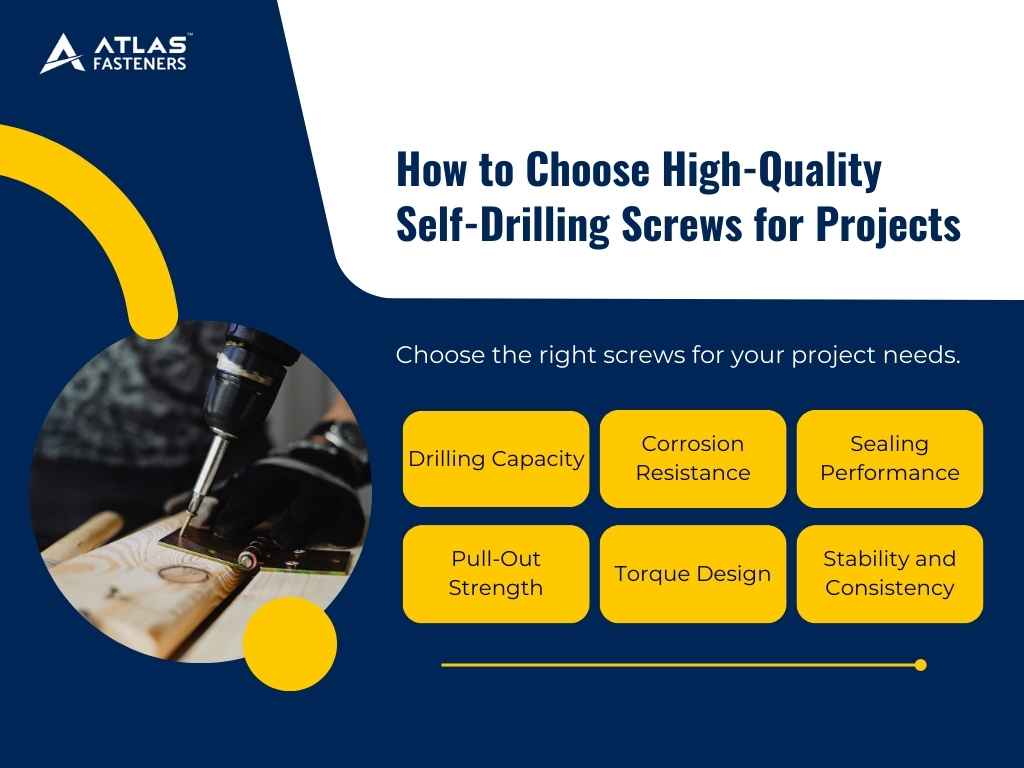
What Are Self-Drilling Screws?
Self-drilling screws are screws equipped with a drill point design that allows them to penetrate materials such as metal or wood during installation without the need for pre-drilling. These screws are commonly used for quickly installing steel structures, metal cladding, mechanical equipment, or aluminum components, offering advantages such as time savings, simplified construction, and reduced need for tool changes.
Its core components include:
- Drill Point: Functions like a drill bit, allowing automatic penetration.
- Thread: Ensures secure fastening.
- Head Type: Common types include Phillips, hex, and washer heads, chosen based on application requirements.
- Surface Coating: Examples include zinc, zinc-aluminum alloy, or Class 3/4 corrosion-resistant coatings to enhance weather durability.
How to Choose High-Quality Self-Drilling Screws for Projects
When selecting self-drilling screws, it's not just about the price. You must evaluate whether they meet the following key performance criteria based on your specific project conditions:
- Drilling Capacity : Can it easily penetrate the required thickness of steel? For instance, Atlas Fasteners' Metal-Shot™ 10-16x16mm is designed to drill through steel up to 4.0mm thick.
- Corrosion Resistance : Does it comply with Australian AS3566.2 anti-corrosion standards? Corrosion resistance classifications such as Class 3 is recommended in low salinity coastal areas and low pollution urban or industrial areas, while Class 4 is recommended for coastal areas with rough seas and turf.
- Sealing Performance : Is it equipped with EPDM washers to effectively prevent water penetration and corrosion on roofs or wall panels? Is the EPDM material used genuine, and enough to provide sufficient weathering resistance for the years to come?
- Pull-Out Strength and Torque Design : Can it withstand sufficient loads? Inferior screws are prone to stripping or breaking. Poorly designed threads will not provide enough pull-out strength to withstand wind or snow loads.
- Stability and Consistency : A high-quality screw should provide consistent drilling performance, minimizing wobble or drill point damage.
When Should You Use Self-Drilling Screws?
If your project involves any of the following scenarios, then using self-drilling screws is the most efficient and reliable choice:
- Installing Metal Components (e.g., steel beams, frames, aluminum parts) When metal sheets need to be fixed onto steel structures or supports, self-drilling screws save time by eliminating the need for pre-drilling.
- Assembling Hybrid Wood-to-Metal Structures For example, solar panel frames, steel-wood composite windows, or electrical enclosures—self-drilling screws offer both penetration capability and fastening strength, making them ideal screws for wood to metal applications.
- Outdoor Cladding Installations (roofs, wall panels, fences) Heavy duty self drilling metal screws with weather-resistant coatings and sealing washers can withstand wind, rain, and prevent corrosion or leakage.
- Fast Installations or Situations Where Pre-Drilling is Inconvenient In cases such as high-altitude work or urgent repairs, screws with stable drilling performance and strong pull-out strength enhance both efficiency and safety.
Suitable Materials for Self-Drilling Screws
Different materials have different requirements for screws. Here are some common material pairings and recommended screw features:
- Metal to Metal : Choose screws with a strong drill point (such as SD3 or SD5 types) combined with high shear strength.
- Wood to Metal : It is recommended to use double-thread designs or specially adjusted thread pitches to effectively grip both wood and metal, making them ideal screws for wood to metal applications.
- Thin gauge materials such as Aluminum or Color-Coated Steel Sheets : Thin gauge substrates require larger pitch and thread diameters, slightly larger washer head flange for better fixing strength, as well as larger diameter washers to avoid over-compression and material deformation.
- Galvanized or Zinc-Aluminum Coated Steel Sheets : Proper drilling point design will provide good penetration, while anti-static washers will prevent galvanic corrosion.
Purchasing Considerations for Self-Drilling Screws
When purchasing, consider evaluating the following aspects:
- Application Scenario : Determine whether the screws will be used indoors or outdoors, which affects the required corrosion resistance level and head type.
- Material Penetration Thickness : Ensure that the drill point design of the screw can handle the required depth (e.g., the Atlas HWF series is suitable for materials up to 4.0mm thick).
- Color Matching Needs : Are Colorbond® matching color options available to ensure consistent and aesthetic appearance?
- Tool Compatibility : Are the screws compatible with common magnetic sockets or power tools? This avoids inconvenience during on-site installation. For example, never use an impact driver to fix self-drilling screws into metal substrates.
- Third-Party Testing or Certifications : Compliance with standards such as AS3566 or ISO which are backed by accredited 3rd party laboratories indicate a more reliable and quality-assured product.
FAQ Q&A
Q: How long can self-drilling screws last?
A: It depends on the environment and coating. Australian AS3566 Class 3 rated screws typically last 8–12 years outdoors, and even longer in dry, unpolluted environments.
Q: How can self-drilling screws be protected from rust?
A: Use screws with corrosion-resistant coatings rated Class 3 or higher, and avoid contact with incompatible metals to prevent galvanic corrosion.
Q: How can water leakage be prevented after using self-drilling screws?
A: Use EPDM sealing washers and ensure appropriate torque during fastening to prevent over-compression or deformation, which ensures effective sealing.
Q: How thick of metal can self-drilling screws penetrate?
A: Depending on the drill point type, they can typically penetrate 2.0mm to 6.0mm. Refer to manufacturer specifications (e.g., Metal-Shot™ indicates up to 4.0mm).
Q: Can self-drilling screws be used directly on wood?
A: Yes, but make sure that the thread pitch and diameter are suited for wood to avoid cracking.
Q: When is it appropriate to use self-drilling screws?
A: When you need to drill and fasten simultaneously, in situations where pre-drilling is inconvenient, or when high installation efficiency is required.
Q: Do you need to pre-drill before using self-drilling screws?
A: Generally no, unless the material is particularly hard or precise placement is required—in which case, pre-drilling a pilot hole may be considered.
Further reading:
What Are Self-Drilling Screws and How Do They Work?
Top Colorbond Roofing Screws: Cyclone Rated & Self Drilling
Collated Screws vs Self Tapping Screws: How to Choose the Right Screws
Tek Screws for Steel & Wood to Metal: Common Installation Mistakes