
Latest News
- Home
- Latest News
- Tek Screws for Steel & Wood to Metal: Common Installation Mistakes
2025.09.01
Latest News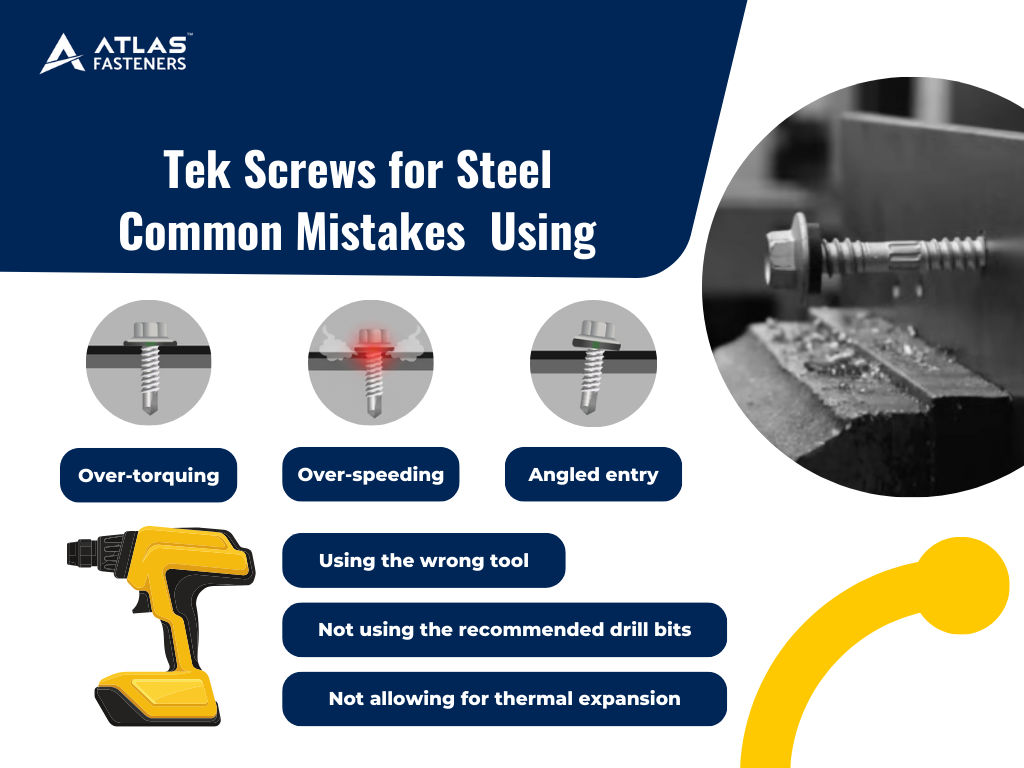
What Is a Tek Screw for Steel?
A tek screw for steel belongs to the teks self drilling screws category. It features a self-drilling tip that eliminates the need for pre-drilling when fastening into metal.
Key characteristics:
- Drill-point types (e.g., No.1pt, No.3pt, No. 5pt)
- Normally made from tempered carbon steel.
- Corrosion-resistant coatings (e.g., Electroplated Zinc, Mechanically plated zinc-tin, Organic Ruspert Topcoat)
- Various options for penetrating different metal substrate thicknesses.
These self-drilling screws for metal are widely used in metal roofing sheet fixing, steel framing, truss fixing, joining metal substrates, HVAC systems installation, ventilation duct fixing and more.
What's the Difference Between a Regular Screw and a Tek Screw for Steel?
Many assume all screws are interchangeable—but they’re not. Here’s how TEK screws for steel differ:
| Features | T17 Timber Screw | Tek Screw for Steel |
| Drill Function | None required. Sharp tip drill directly through timber. | Yes – self-drills and self-taps |
| Material Use | Wood | Steel, Aluminum, Stainless Steel |
| Tool Requirements | Impact drivers (w/torque limiter) | Electric hand-drill (w/torque limiter) + magnetic socket bits (recommended) |
| Speed | Moderate | Fast and efficient |
Using the wrong screw on metal can lead to failed fastening and compromised safety.
What Sizes Are Available for Tek Screws for Steel?
Choosing the right size is critical for reliable fastening.
Common specifications:
- Sizes: M3.5~M6.3 (#6~#14)
- Length: 9.5mm ~ 400mm (0.374”~15.75”)
- Drilling capacity: Typically 1.0mm–12.0mm steel
- Thread types: Full, Partial, Hi-Low, or Double threads depending on the application.
- Head Profiles: Hex Washer Flange, Hex Washer, Countersunk, Pan, Flat, etc…
Always match screw size to steel thickness and structural load to avoid under- or over-penetration.
How Much Weight Can Tek Screws for Steel Hold?
Although small, Tek screws for steel are engineered for high pull-out and shear strength:
- Tested to AS3566 or equivalent standards, a typical Tek screw can handle 1,200–2,500N depending on its size, and the substrate affixed to.
- Actual capacity depends on spacing, steel thickness, and number of screws used.
Important: Never rely on a single screw to bear all load. Distribute load evenly through design.
Common Mistakes When Using Tek Screws for Steel
Even with the right screw, poor technique can cause failures like stripping or steel deformation.
Common mistakes:
- Over-speeding: Overheats and cause burnouts, damaging the drilling tip, resulting in no penetration.
- Over-torquing: May cause threads to strip, damages to rubber washers, and deforming the metal substrates that are fixed.
- Using the wrong tool: Impact drivers cause over-torquing and stripping and have to be avoided.
- Not using the recommended drill bits: May damage the head or recess and loss of grip.
- Angled entry: Misaligns screw, weakens hold, damages rubber washers.
- Not allowing for thermal expansion: Leads to stress cracks and fastener fatigue
Best practices:
- Use the tapping method during the initial drill-drive.
- Start with a few quick taps until the tip has bit into the metal substrate.
- Maintain a steady rpm during the rest of the drill-drive process, stopping intermittently to prevent heat buildup.
- Use torque-controlled electric hand-drills.
FAQ Q&A
Q: How do I choose the right size tek screw for steel?
A: Base it on metal thickness, drilling depth, and fastening force required. Always refer to manufacturer specs.
Q: Why are winged tek screws used when attaching wood to metal?
A: Wings pre-bore the wood and break off on contact with metal, preventing premature thread engagement and ensuring a flush fit.
Q: Can tek screws be used on stainless steel?
A: Yes, but use hardened screws with appropriate drill tips to avoid burning the point.
Q: What tool should I use for tek screw installation?
A: A torque-adjustable electric driver with a 5/16” magnetic socket is ideal.
Q: How do I make sure my tek screws are watertight and secure?
A: Use screws with EPDM washers, drill vertically, and apply just enough torque to slightly compress the washer.
Further reading:
Self-Drilling Screws vs Self-Tapping Screws — Key Differences
Top Colorbond Roofing Screws: Cyclone Rated & Self Drilling
Collated Screws vs Self Tapping Screws: How to Choose the Right Screws
Screws Guide: Self-Tapping, Wood-to-Metal & MoreBest Use Cases for Self-Drilling Screws in Wood, Steel, and Aluminum