
Latest News
- Home
- Latest News
- Metal Roofing Screws: Installation Tips & Over-Torquing Prevention
2025.09.01
Latest News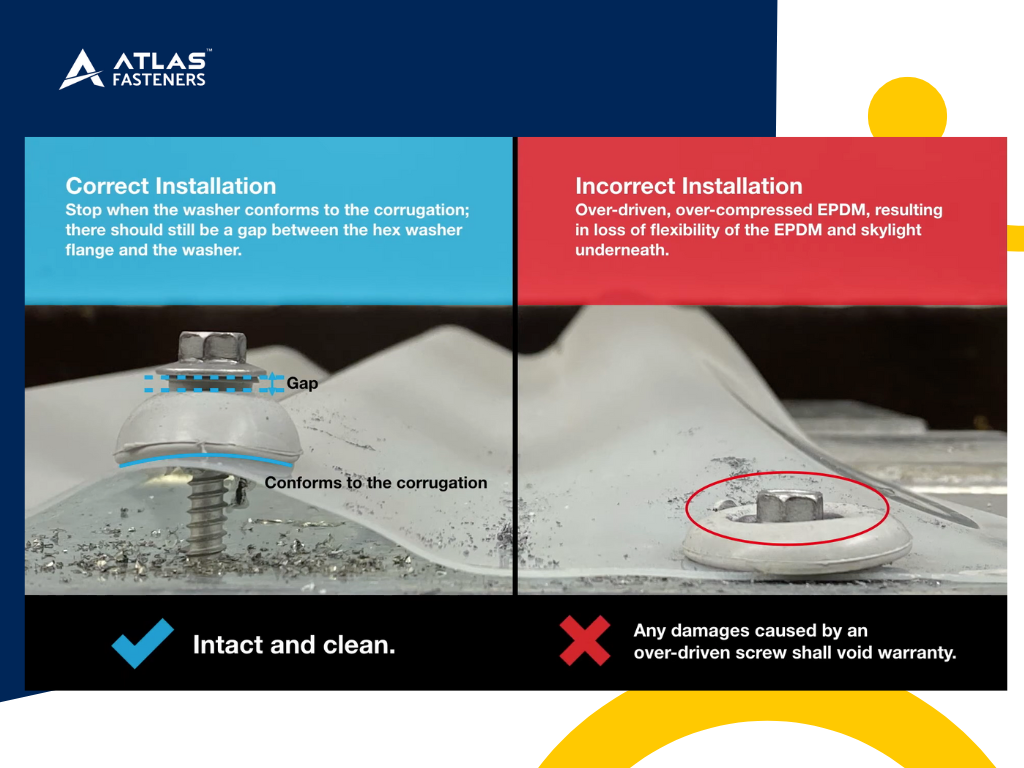
What Types of Screws Are Used for Metal Roofs?
Common types of metal roof screws include:
- Self-Drilling Screws: No pre-drilling required; they drill, tap, and fasten in one step. Ideal for steel roof structures.
- Self-Tapping Screws: Require a pre-drilled hole. Suitable for thinner metals or mixed wood-metal structures.
- Color-Matched Screws: Designed for use with Colorbond® roofs, these provide weather resistance and visual consistency.
- Washer-Head Screws: Equipped with EPDM washers for added waterproofing—commonly used for flashing and cladding edges.
Make sure screws meet corrosion resistance standards like AS3566 (Class 3 / Class 4) and are compatible with the materials and climate of the project site.
How Many Fasteners Does a Metal Roof Need?
The number of roofing fasteners impacts the roof’s wind resistance and longevity:
- On average, 6–10 screws per square meter are recommended, though exact counts depend on panel profile, frame spacing, and local wind zone ratings.
- Corrugated and flat panels differ: Corrugated sheets should always be fastened on roof crests to prevent leakage since water tends to flow to the lowest point possible. Wall cladding sheets can be fixed on the valleys. Flat panels should be fixed using glazing bars or framing methods.
- Avoid excessive screw clustering too close to the edges to prevent stress cracking due to thermal expansion.
Tip: Edge zones experience higher wind uplift; use more screws per linear meter for better pull-out strength.
What Is the Proper Screw Fastening Pattern for Metal Roofs?
Proper roofing fastener placement ensures durability, weatherproofing, and structural integrity:
- Screw Spacing: Based on purlin distance (e.g., 600mm or 1200mm), screws should be evenly distributed.
- Crest or Valley Fastening: Crest-fastening is a must when fixing roofing sheets to prevent water leakage; valley-fastening provides a good structural hold and is best used on wall cladding. A hybrid approach may be used but with caution.
- Washer Compression: All exposed screws should include EPDM washers. The washer should compress slightly—neither too loose nor overly crushed.
Vertical Alignment: Screws must be driven straight to avoid leakage and pull-out risks.
Can Screws Cause Roof Leaks?
Yes, and it’s one of the most common failure points.
Typical causes of metal roof leakage include:
- Misaligned or under-tightened screws that don’t compress the washer properly.
- Aged or cracked washers.
- Elongated holes caused by thermal expansion.
- Rusted or broken screws that compromise fastening.
To prevent leaks, inspect washers, screw tightness, and corrosion status annually.
How to Prevent Over-Torquing?
Over-Torquing is one of the most critical yet overlooked errors during installation.
Over-Torquing Can Lead To:
- Washer deformation, causing loss of waterproof seal
- Screw head breakage or stripping
- Panel indentation, creating drainage traps
- EPDM washer damage and water ingress
Prevention Tips:
- Use torque-adjustable drivers and set torque levels according to screw type and roof specs.
- Avoid impact drivers for precision work.
- Visually inspect washer compression during installation—stop when slightly compressed.
- Train installation teams and follow standard torque procedures.
FAQ Q&A
Q: What type of screws are best for metal roofs?
A: Self-drilling screws with EPDM washers, corrosion-resistant coatings, and drill tips suited for your substrate—e.g., METAL-Tite™ or Roof-Shot™.
Q: What happens if you over-tighten roof screws?
A: It can deform the washer, strip the screw, damage the panel, and cause water leaks.
Q: How do you prevent roof screws from leaking?
A: Use proper sealing washers, drive screws vertically, apply moderate torque, and check regularly.
Q: Is there a standard screw spacing for metal roofs?
A: Yes, typically 300–500mm, depending on wind loads and framing specs.
Q: How often should metal roof screws be inspected or replaced?
A: Check annually. Replace if you see rust, loosening, or washer damage.
Further reading:
Tek Screws: Match Drill Point & Wing to Metal Gauge for Strength
Cyclone Rated, Colorbond & Sandwich Panel Screws Explained
Skylight Leaks When It Rains? Check Plastic Corrugated Roofing
How to Choose Tek & Metal Roof Screws to Prevent Over-Torquing
Metal Roofing Screws: Installation Tips & Over-Torquing Prevention