
Latest News
- Home
- Latest News
- Skylight Leaks When It Rains? Check Plastic Corrugated Roofing
2025.09.15
Latest News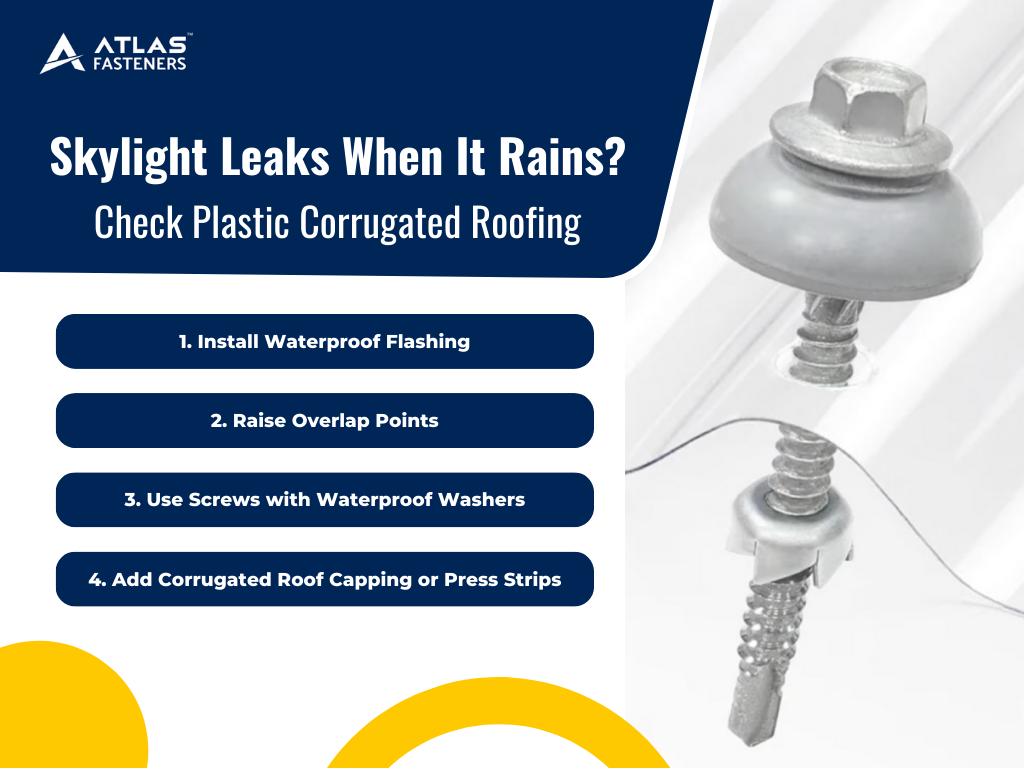
For many homeowners, a skylight is the perfect solution for bringing natural light indoors. Especially when installing skylights in metal roofs, it can brighten up the space and make the interior feel more open. However, if skylight leaks when it rains, it can be frustrating and costly.
While most people first suspect the skylight’s quality or aging issues, a significant number of cases are actually caused by plastic corrugated roofing installation mistakes.
As a company specializing in roofing screws, waterproofing accessories, and installation solutions, Australian Screw Factory has compiled years of experience to explain the root causes of this problem and share tips on how to install plastic corrugated roofing to avoid future leaks.
Case Study: The Skylight Was Fine, but the Plastic Roofing Was Installed Wrong
In one Brisbane home, a skylight was installed on a metal roof. Within six months, after the first heavy rain, water began dripping inside. Upon inspection, the skylight itself was in perfect condition, but the surrounding plastic corrugated roofing had multiple installation errors:
- The overlap direction of the corrugated panels was wrong, allowing water to run into the seams.
- The installer over-tightened screws, causing panel deformation and gaps.
- Some sealing strips had already been damaged due to pressure, losing their waterproofing function.
The result: even a brand-new skylight became a leak source due to poor roofing installation.
Common Installation Mistakes
1. Incorrect Overlap Direction
Plastic corrugated roofing is designed with a specific ridge-and-valley pattern for water drainage. If the overlap direction is reversed during installation, rainwater can seep through the seams. This is one of the most common causes of skylight leaks when it rains.
2. Screws Too Tight or Too Loose
When installing plastic corrugated roofing, overtightening self-drilling screws can compress and deform the panels, while under-tightening leaves them unstable. Both scenarios create gaps where water can penetrate.
3. Low-Quality Seals or Washers
Some contractors use low-grade sealing strips that quickly harden, crack, or shrink due to UV exposure and temperature changes, losing their sealing ability.
How to Design a Waterproof Structure When Installing Skylights with Plastic Corrugated Roofing
To ensure skylights in metal roofs work seamlessly with plastic corrugated roofing, the key is to focus on “water diversion” and “sealing”:
1. Install Waterproof Flashing
Add metal or plastic flashing around the skylight to direct water toward the roof slope, preventing water accumulation near joints.
2. Raise Overlap Points
Use high-ridge panel designs or elevate overlap areas near the skylight to reduce water pooling.
3. Use Screws with Waterproof Washers
Choose high-quality self-drilling screws with EPDM or silicone washers that resist UV damage and temperature extremes.
4. Add Corrugated Roof Capping or Press Strips
In areas prone to heavy rain or strong wind, add press strips to secure panel seams and prevent movement.
Recommended Solutions
From the experience of Australian Screw Factory, the following products and methods can greatly reduce the risk of skylight leaks:
- Premium Self-Drilling Screws – With anti-corrosion coatings and reinforced threads, suitable for both plastic and metal roofing.
- EPDM Waterproof Washers – UV-resistant, flexible, and long-lasting sealing performance.
- Dedicated Flashing Kits – Provide extra waterproof protection around skylights.
- Press Strip Systems – Strengthen panel seams and prevent gaps caused by wind.
Frequently Asked Questions (FAQ)
Q: Why does skylight leaks when it rains happen?
A: It can be caused by skylight aging or damaged seals, but more often by plastic corrugated roofing installation errors—such as reversed overlaps, over-tightened screws, or failed sealing strips.
Q: What should I watch out for when installing plastic corrugated roofing?
A: Correct overlap direction, consistent screw torque, high-quality waterproof washers, and avoiding screw placement in the panel valleys (always fasten on the ridges).
Q: What waterproofing should I use when adding skylights in metal roofs?
A: Use flashing, quality screws and washers, and proper edge finishing to ensure smooth water flow.
Q: How can I prevent leaks between skylights and roofing?
A: Plan water flow paths before installation, maintain even screw pressure, and check each washer for full contact.
Q: How do I know if the leak is from poor installation or skylight aging?
A: If the leak is near joints or screws, it’s likely an installation issue. If water seeps from the glass edges, it may be due to skylight frame or sealant deterioration.
A leaking skylight isn’t always the skylight’s fault—many times, the real issue lies in the installation details of the plastic corrugated roofing. If you’re dealing with skylight leaks when it rains, or planning to install skylights in metal roofs, remember: proper installation and high-quality components are the keys to long-term waterproofing.
ATLAS Fasteners™ offers professional-grade self-drilling screws, waterproof washers, flashing kits, and press strip systems. We can also provide tailored installation advice based on your specific roof and skylight design. Contact us today for a custom quote and installation guide—and keep your roof completely leak-free, even in the heaviest storms!
Further reading:
Cyclone Rated, Colorbond & Sandwich Panel Screws Explained
Skylight Leaks When It Rains? Check Plastic Corrugated Roofing
How to Choose Tek & Metal Roof Screws to Prevent Over-Torquing
Metal Roofing Screws: Installation Tips & Over-Torquing Prevention