
Latest News
- Home
- Latest News
- How to Build a Green House: Roof Materials and Wind Resistance Guide
2025.09.15
Latest News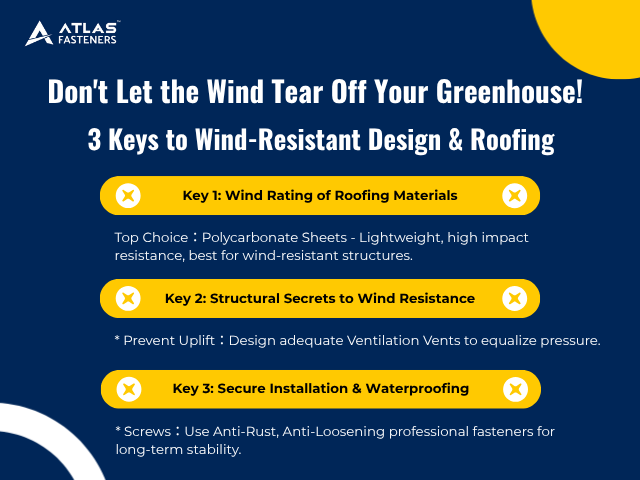
When planning a greenhouse, one of the first questions many people ask is: “What material should I use for the roof?” This is not only a matter of appearance or cost—it directly affects the greenhouse’s durability, the health of the plants, and the overall safety of the structure. Different green house roof materials each come with their own advantages and limitations. Choosing the wrong one can result in frequent maintenance, poor wind resistance, or even reduced crop growth.
In this article, we’ll walk you through the first step of how to build a green house—selecting the right roofing material. We’ll compare polycarbonate, glass, and PE film, and explain their strengths and weaknesses. Then, we’ll look at the design essentials for wind resistant greenhouses, from ventilation to screw installation details. Finally, we’ll address some common FAQs so you can plan with confidence.
Step One in How to Build a Green House: Start with the Roof
The greenhouse is a structure that relies heavily on the right materials. While the foundation and frame are important, the roof is the component most exposed to weather, including wind, rain, and UV radiation. Ignoring the choice of roofing material often leads to long-term issues.
The first step in how to build a green house is to ensure the roof can meet three critical requirements:
- Light Transmission-Plants need sufficient sunlight for photosynthesis.
- Weather Resistance -The roof must withstand strong sun, hail, and storms.
- Structural Compatibility – It must connect securely to the frame to prevent leaks or loosening.
Choosing the right green house roof materials is essentially laying the foundation for a long-lasting greenhouse.
Pros and Cons of Common Green House Roof Materials
1. Polycarbonate Sheets
- Advantages:
High light transmission while blocking UV rays.
Lightweight, impact-resistant, and less likely to crack.
Long service life with minimal maintenance. - Disadvantages:
Higher upfront cost.
Can yellow over time under prolonged sun exposure. - Best Use:
Ideal for long-term, durable wind resistant greenhouses.
2. Glass
- Advantages:
Maximum transparency and light transmission.
Attractive aesthetics, perfect for display or ornamental greenhouses. - Disadvantages:
Heavy weight, requiring stronger frame support.
Fragile, prone to breaking in hail or strong winds. - Best Use:
High-end or landscape projects where both function and appearance matter.
3. Polyethylene Film (PE Film)
- Advantages:
Lowest cost, easy to install.
Lightweight and flexible, suitable for large coverage. - Disadvantages:
Short lifespan (2–4 years on average).
Poor wind resistance, easily damaged in storms. - Best Use: Temporary or budget-sensitive greenhouse projects.
When selecting green house roof materials, it’s important to balance durability, budget, and climate conditions, rather than basing the decision on cost alone.
Key Design Principles for Wind Resistant Greenhouses
Even the best materials cannot perform well if the structure itself is weak. Building reliable wind resistant greenhouses requires attention to these essential design elements:
- Ventilation Design: Properly placed vents reduce pressure differences and prevent roofs from lifting.
- Roof Slope: A slope between 25° and 35° helps reduce wind resistance and allows water to drain quickly.
- Frame Spacing : Shorter spacing between columns improves stability; steel or aluminum frames are common choices.
- Quality Fasteners: It’s not just about tightening screws; anti-rust, anti-loosening fasteners are crucial for durability.
By incorporating these factors at the design stage, you can significantly lower the risk of future repairs.
Four Rules for a Strong Fixing Structure
Many greenhouse failures are not caused by poor materials but by improper installation. To ensure structural stability, follow these four rules:
- Choose the Right Screws : For structure and framing fixings, choose from our AS3566 compliant, Metal-Shot™, Timber-Shot™ or Batten-Shot™ fixings. For roofing skylights, choose from our Kwik-Shot™ and Fiber-Shot™ series to allow for thermal expansion and increase sheet longevity.
- Correct Screw Placement: Screws are usually installed on the crest (not the valley) to prevent water leakage.
- Even Distribution: A general rule of thumb is to fix 7 fasteners per linear meter, which should also be placed evenly to achieve evenly distributed load, and shall lower the risk of panels lifting in strong winds.
- Add Seals and Eave Infill Strips: These enhance airtightness and will prevent wind infiltration as well as dust and water ingress.
Attention to these small details can greatly extend the life of a greenhouse.
Frequently Asked Questions (FAQ)
Q: Which green house roof materials are best for wind resistance?
A: Polycarbonate sheets are generally the top choice due to their light weight, durability, and impact resistance, making them ideal for wind resistant greenhouses.
Q: If my budget is limited, can I use PE film in how to build a green house?
A: Yes, but keep in mind that it has a short lifespan and poor wind resistance. Reinforced frames and denser fixing points are highly recommended.
Q: What type of screws should I use when building a greenhouse?
A: Choose screws with rust-resistant coatings and anti-loosening features. Screw length and washers should match the roofing material.
Q: Should screws be fixed on the crest or the valley when installing roofing panels?
A: It’s usually best to fix screws on the crest to minimize water pooling and leakage.
Q: What happens if I choose the wrong green house roof materials?
A: Poor choices can lead to insufficient light, structural instability, frequent repairs, and ultimately higher overall costs.
The Right Materials and Design Create a Stronger Greenhouse
Whether for agriculture, gardening, or landscaping, selecting the right green house roof materials and combining them with proper structural design is the key to building a durable greenhouse. From polycarbonate to glass to PE film, each material has its own ideal applications. But the real difference lies in pairing materials with strong wind-resistant design and high-quality fastening components.
If you’re planning how to build a green house, or need professional solutions for wind resistant greenhouses, get in touch with us today. We provide durable roofing materials and premium fastening systems that help you build safer, stronger, and more efficient greenhouses—reducing long-term costs and ensuring lasting performance.
Further reading:
Tired of Loose Metal Fixes? Use Heavy Duty Tek Self-Drilling Screws!
How to Use Self Drilling Screws and Collated Screws
Differences Between Tek Screws and Self Drilling Screws for Metal & Heavy Duty Installation Tips