
Latest News
- Home
- Latest News
- Polycarbonate Roofing Tips for Pergolas and Greenhouses
2025.09.15
Latest News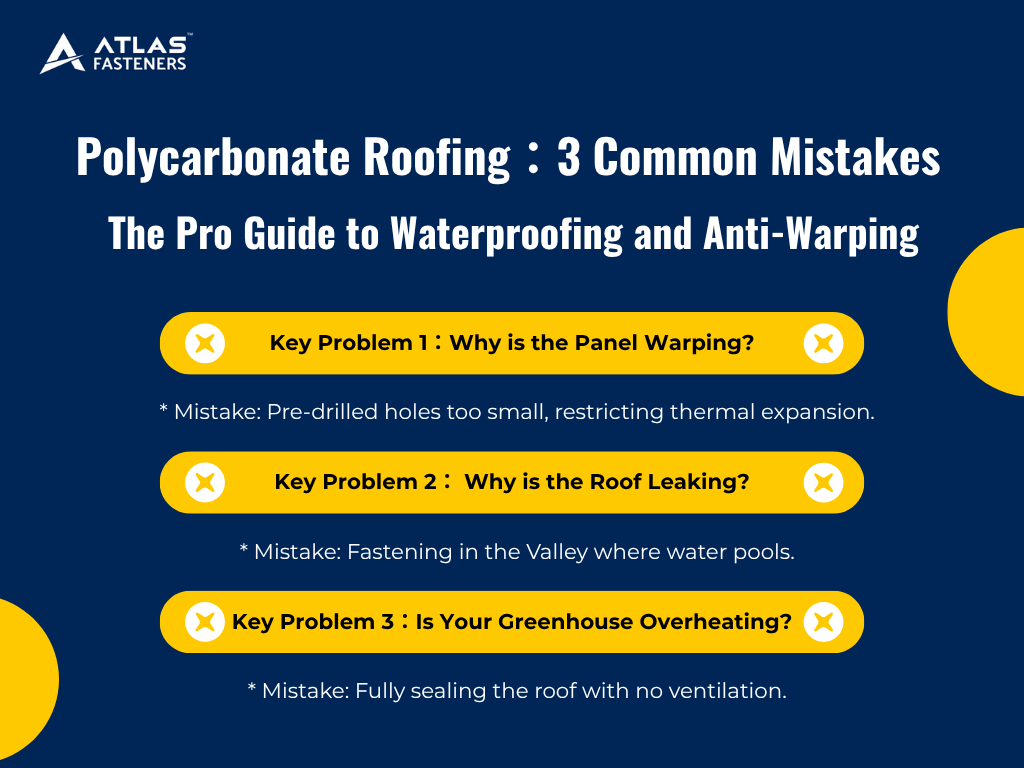
When it comes to putting a roof on a pergola or designing a greenhouse roof, polycarbonate sheets are one of the most popular choices thanks to their durability, light transmission, and weather resistance. However, poor installation and incorrect design can cause problems such as water leaks, warped panels, or premature damage.
This guide combines practical installation techniques with greenhouse roof design considerations and a polycarbonate thickness chart reference to help you get it right the first time.
Greenhouse Roof Design: Should You Leave Ventilation Gaps?
In any greenhouse roof design, ventilation is essential. A common mistake is to create a completely sealed roof without exhaust vents. Without proper ventilation:
- Heat builds up under the roof, causing the inside temperature to rise excessively.
- Polycarbonate panels can expand and warp under prolonged heat exposure.
- Condensation may form, encouraging mold and mildew growth.
Best Practice:
Include ridge vents or strategically placed side vents to allow hot air to escape naturally. This reduces the internal temperature and extends the lifespan of your polycarbonate roofing.
Preventing Warping in Thick Polycarbonate Panels
Thicker panels (as shown in most polycarbonate thickness chart references) provide better insulation and impact resistance but are more prone to thermal expansion. Over time, this can cause wave-like distortion or loosened fasteners.
How to Avoid These Issues:
- Pre-drill Holes with Expansion Allowance – Drill holes slightly larger than the screw diameter to allow panel movement.
- Use Heat-Expansion Washers – Special polycarbonate washers maintain a seal without restricting expansion.
- Control Screw Torque – Avoid overtightening; the screw should hold the panel securely but still allow slight movement.
Fastening Technique: Crest or Valley?
One of the most debated questions when putting a roof on a pergola or greenhouse is: should you fasten the screws on the crest (high point) or the valley (low point) of the corrugation?
Why Crest-Fixing Is Recommended:
- Less risk of water ingress since water runs off the high point.
- Prevents water pooling around screw holes, which can cause leaks.
Risks of Valley-Fixing:
- Water accumulates in valleys, increasing the risk of leaks.
- Higher chance of panel cracking due to trapped moisture and stress.
Best Practice:
Fasten screws on the crest with a self-drilling roofing screw, paired with a waterproof washer. Use metal spreader plates to distribute pressure evenly and prevent panel damage.
Frequently Asked Questions (FAQ)
Q: For putting a roof on a pergola, what thickness of polycarbonate should I use?
A: For outdoor pergolas, 8mm–10mm twin-wall polycarbonate is common for durability and insulation. Check the polycarbonate thickness chart for load-bearing and light transmission ratings.
Q: Does a greenhouse roof design require ventilation openings?
A: Yes. Ventilation is crucial to avoid overheating and to prevent polycarbonate panels from warping.
Q: Does the thickness in a polycarbonate thickness chart affect light transmission?
A: Yes. Thicker panels reduce light transmission slightly but improve insulation and strength. Choose based on your climate and plant needs.
Q: Does thicker polycarbonate expand more under heat? How to prevent warping?
A: Thermal expansion is proportional to temperature change, not thickness. However, thicker panels retain more heat, so proper installation (pre-drilled oversized holes, washers) is vital.
Q: Should screws be fixed on the crest or valley?
A: Crest-fixing is recommended for better waterproofing and reduced risk of leaks.
Further reading:
Cyclone Rated, Colorbond & Sandwich Panel Screws Explained
Skylight Leaks When It Rains? Check Plastic Corrugated Roofing
How to Choose Tek & Metal Roof Screws to Prevent Over-Torquing
Metal Roofing Screws: Installation Tips & Over-Torquing Prevention