
Latest News
- Home
- Latest News
- Roofing Fasteners 101 — Preventing Leaks and Corrosion
2025.12.01
Latest News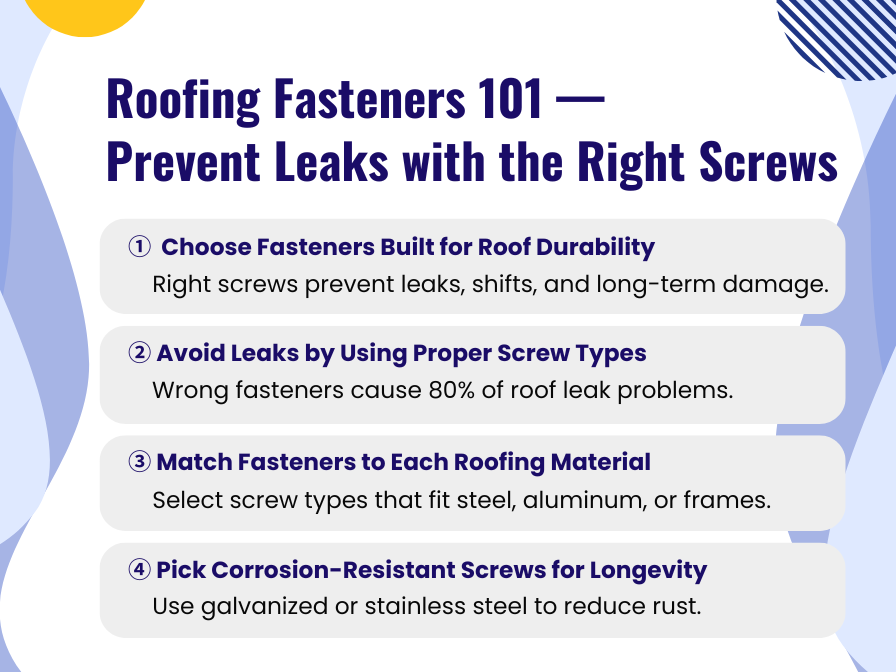
When it comes to metal roofing or any roof system, roofing fasteners often determine how long the roof can truly last. Many cases of leaks, panel loosening, or deformation are not caused by the roofing material itself but by using the wrong screws. This article explains the role of fasteners, how metal roof screws and self drilling screws enhance durability, and why choosing the right components is essential for long-term roof performance.
Why Roofing Fasteners Determine the Lifespan of Your Roof
The durability of any roof system isn’t solely determined by the thickness or strength of the panels—it depends heavily on the screws that hold everything together. Proper roofing fasteners maintain panel alignment, resist thermal expansion, and prevent water penetration. This section explains why screws are the foundation of your roof’s lifespan.
Key Insights and Structured Details
Roofing fasteners do far more than simply hold panels in place. Their functions include:
- Withstanding wind pressure, rain, and thermal movement
- Maintaining panel-to-structure contact
- Preventing screw-hole enlargement leading to leaks
- Avoiding corrosion at connection points
Common issues caused by improper roofing fasteners include:
- Screw snapping or pull-out
- EPDM washer failure leading to water ingress
- Zinc coating deterioration causing rust
- Distortion of metal roofing panels during temperature shifts
Even with high-quality roof panels, using the wrong screws will cause premature failure. Next, we'll explore why most roof leaks are actually caused by fasteners—not the roof.
The Real Cause of Roof Leaks: It’s Not the Roof — It’s the Wrong Screws
Roof leaks are more common than most people think, and research shows that more than 80% of roof leaks originate from screw issues rather than roofing material problems. This section breaks down how incorrect fastener selection leads to leaks and structural deterioration.
Key Insights and Structured Details
1. Using the wrong type of screws
- Using generic wood screws instead of dedicated metal roof screws
- Missing EPDM sealing washers
- Insufficient drilling ability causing panel warping
2. Incorrect installation torque
- Over-tightening → damages EPDM washer, causing leaks
- Under-tightening → allows movement, enlarging the screw hole
3. Poor corrosion resistance
- Salt corrosion accelerates rust in coastal areas
- Electro-galvanized screws rust faster than expected
- Painted coatings chip, leading to rapid degradation
4. Not choosing self drilling screws when required
- Manual drilling creates burrs that trap water
- Misaligned holes prevent proper panel compression
Since the main source of leaks is improper screw selection, the next section will explain the different types of roofing fasteners and how they function.
Types of Roofing Fasteners and Their Functions
Different roofing structures require different screw designs. This section categorizes common roofing fasteners and clarifies their roles, making it easier to select the right type for various applications.
Key Insights and Structured Details
1. Metal Roof Screws
Best for: steel panels, aluminum panels, corrugated sheets
Features:
- Equipped with EPDM washers
- Designed for thermal movement
- High pull-out strength
2. Self Drilling Screws
Best for: steel frames and metal substrates
Features:
- Require no pre-drilling
- Reduce installation time
- Produce clean, precise holes
3. General Roofing Fasteners
Includes:
- Hex-head screws
- Washer-head screws
- Hinge-style roofing screws
Features:
- Versatile
- Support various roofing materials
4. Coastal-Grade Stainless Steel Screws
Features:
- Best resistance against salt spray and corrosion
- Higher cost but longer lifespan
- Ideal for buildings near the coastline
After understanding screw types, we now explain how metal roof screws specifically prevent leaks in metal roofing systems.
How Metal Roof Screws Prevent Leaks in Metal Roofing Systems
Metal roofing systems rely heavily on metal roof screws. This section breaks down the engineering behind EPDM seals, compression design, and drilling precision to demonstrate how the screws maintain long-term waterproofing and structural stability.
Key Insights and Structured Details
1. EPDM Washer Sealing Technology
EPDM provides:
- UV resistance
- Heat tolerance
- Long-term flexibility
When compressed, EPDM forms a water-tight seal around the screw.
2. Controlled Clamping Pressure
- Prevents panel deformation
- Ensures consistent contact
- Minimizes wind-induced vibration
3. Hole Precision via Self Drilling Screws
Self drilling screws ensure:
- No burrs
- No coating scratches
- Clean, accurate holes
4. Anti-Loosening Thread Design
Metal roof screws typically feature:
- High pull-out resistance
- Stability against thermal expansion
- Reduced loosening from vibrations
Since design and installation are important, selecting the right screw material is equally critical. The next section compares corrosion-resistant options.
Corrosion Resistance Comparison:
Galvanized, Painted, or Stainless Steel — Which Is Best?
Even the strongest screws will fail if the material is not suitable for the environment. This section compares galvanized, painted, and stainless steel roofing fasteners to help determine the right choice for different conditions.
Key Insights and Structured Comparison
1. Galvanized Screws
- Pros: affordable, widely used
- Cons: limited salt resistance
- Best for: inland warehouses, factories, standard roofs
2. Painted / Color-Coated Screws
- Pros: aesthetic finish, added corrosion protection
- Cons: coating damage reduces durability
- Best for: panels requiring color-matched appearances
3. Stainless Steel Screws (304 / 316)
- Pros: highest corrosion resistance
- Cons: higher cost
- Best for: coastal areas, hot springs, corrosive environments
Frequently Asked Questions (FAQ)
Q:What is the main difference between roofing fasteners and regular screws?
A:Roofing fasteners are engineered for wind load, waterproofing, and thermal cycling—conditions regular screws cannot handle.
Q:Do metal roof screws always need EPDM washers?
A:Yes. EPDM is essential for creating a reliable waterproof seal.
Q:Can self drilling screws be used on all metal roofing materials?
A:Generally yes, but panel thickness must be considered to avoid excessive drilling pressure.
Q:Which screws should be used in coastal environments?
A:316-grade stainless steel provides the best corrosion resistance.
Q:Do roofing fasteners have a service life?
A:Typical lifespan is 15–30 years, but they should be replaced when rust, loosening, or washer deterioration is observed.
Further reading:
Bunnings Roof Screws vs Professional Roof Screws: Which to Use?
Sandwich Panel Screw Tips-Choosing and Installing Metal Roof Self Drilling Screws
How to Prevent Rust and Corrosion on Stitching Screws and Roofing Fasteners
How to Inspect and Avoid Over-Torqued Self Drilling Screws on Roofs
Cyclone Rated Roofing Screws — What Makes Them Wind Resistant?
Colorbond Roofing Screws — Prevent Rust and Maintain Roof Aesthetics
Polycarbonate Roof Screws — How to Fix Sheets Without Cracking
Metal Roof Screws — Choosing the Right Seal and Washer Type