
Latest News
- Home
- Latest News
- Metal Roof Screws — Choosing the Right Seal and Washer Type
2025.12.01
Latest News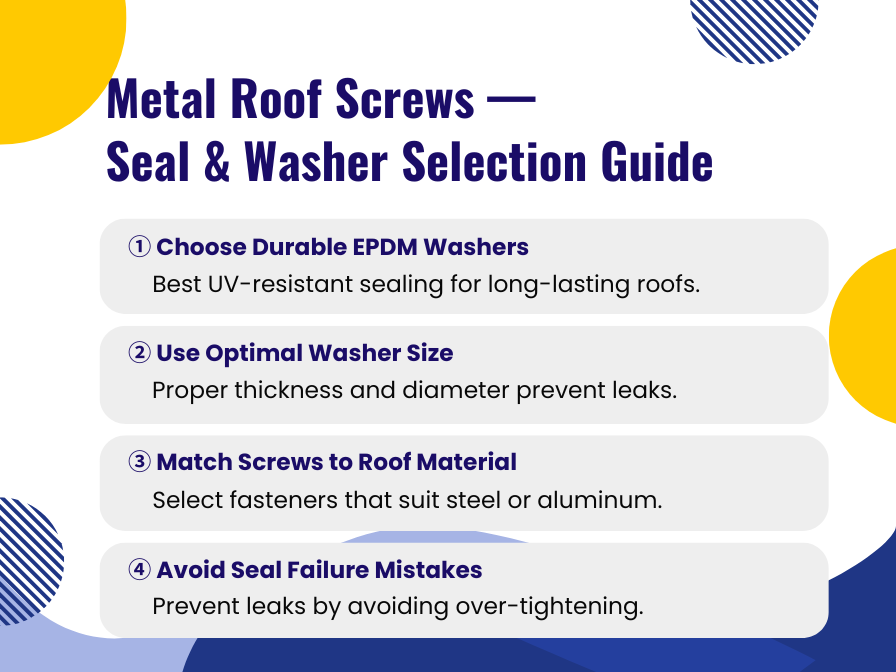
Metal roof durability depends not only on the roofing panels themselves but also on the metal roof screws, roofing fasteners, and seal materials that protect the structure from water infiltration and long-term weathering. The right washer material, thickness, and diameter will directly determine whether the roof remains leak-free for decades.
This article compares EPDM, Neoprene, and PVC washers, explains how size influences sealing performance, analyzes the best screw-and-washer combinations for different roofing materials, and explores the most common causes of sealing failure. We also provide guidance for determining whether a washer has aged and when screws should be replaced.
Comparison of Washer Types: EPDM, Neoprene, and PVC — What Are the Differences?
When choosing metal roof screws, the washer material plays a critical role. It is responsible for sealing, cushioning, and preventing water intrusion. Different materials offer different levels of durability and resistance to outdoor exposure. This section compares the three most common washer materials to help you choose the most reliable option.
EPDM Washers — The Most Weather-Resistant Outdoor Option
EPDM (Ethylene Propylene Diene Monomer) is the most widely used washer material for roofing fasteners:
- Excellent UV, ozone, and heat resistance (up to 120°C)
- Long lifespan: 15–25+ years
- Ideal for roofs with significant thermal expansion
- Maintains elasticity over time and resists cracking
Best choice for environments with intense sunlight and temperature fluctuations.
Neoprene Washers — Good Chemical Resistance but Lower UV Tolerance
Neoprene was popular in early roofing applications but is less common today due to:
- Moderate chemical and oil resistance
- Weaker UV and heat resistance compared to EPDM
- Tendency to harden and crack outdoors within 5–8 years
- Reduced long-term sealing performance
Acceptable for indoor panels, but not recommended for outdoor roofing.
PVC Washers — Low Cost, Poor Durability
PVC washers are inexpensive but have significant drawbacks:
- Poor UV resistance, prone to embrittlement
- Short lifespan (2–5 years)
- High likelihood of cracking and leaking
Rarely recommended for metal roof installations.
After understanding material differences, the next section explains how washer thickness and diameter influence sealing performance.
How Do Washer Thickness and Diameter Affect Sealing Performance?
Beyond material selection, washer thickness and diameter also determine long-term sealing effectiveness. Many roof leaks are caused by mismatched washer sizes rather than screw defects.
1. Washer Thickness — Too Thin Leaks, Too Thick Cracks
Typical thickness ranges from 2.0mm to 3.5mm.
- Too thin (<2.0mm):
Tears easily against metal edges
Insufficient compression
Shortened lifespan
- Too thick (>3.5mm):
Over-compression may cause splitting
Washer may bulge outward
More prone to failure with thermal expansion
➮ Ideal thickness: 2.5–3.0 mm
2. Washer Diameter — Determines Contact and Pressure Distribution
Diameter impacts sealing area:
- Too small (<12mm): insufficient sealing area
- Optimal (13–15mm): suitable for most metal roof screws
- Too large (>18mm): may cause screw tilt during fastening
➮ Best for 10–12 gauge screws: 13–15mm washers
With the proper material and size selected, the next section explores which screw-and-washer combinations offer the best durability for various roofing materials.
Metal Roofing Materials: Which Screws and Washers Provide the Best Durability?
Different roofing materials have varying expansion rates, strength, and corrosion characteristics. This section explains which self drilling screws and washers pair best with each roofing material.
Aluminum-Zinc Coated Steel (AZ150 / AZ200)
Recommended:
- 410 stainless steel self drilling screws
- EPDM washers
Benefits:
- Excellent corrosion resistance
- Handles thermal expansion well
Galvanized Steel (GI)
Recommended:
- Zinc-coated carbon steel screws (≥8μm coating)
- EPDM or Neoprene (non-outdoor use)
Benefits:
- Strong and cost-effective
- Ideal for warehouses and industrial roofs
Color-Coated Steel (PPGI / PPGL)
Recommended:
- Painted head screws
- EPDM washers
Benefits:
- Color matching improves aesthetics
- EPDM prevents premature UV-related aging
Aluminum Roofing
Aluminum expands more than steel, requiring:
- 304 or 410 stainless steel screws
- EPDM washers with higher elasticity
- Larger diameter washers (14–15mm) for better sealing
Next, we explore why screw seals fail and provide real-world case summaries.
Common Mistakes: Causes of Screw Sealing Failure and Case Studies
Most roof leaks originate from sealing failure rather than damaged panels. This section identifies the most common installation and material issues.
Common Causes of Sealing Failure
- Over-tightening → washer cracks or distorts
- Under-tightening → inadequate compression
- Incorrect washer material (PVC cracks quickly)
- Galvanic corrosion between metal types
- Off-center drilling prevents full sealing
- Not using self drilling screws, leading to vibration damage
How to Determine Whether the Screw Seal Has Aged?
Washers and screws age over time. Regular inspection helps prevent costly leaks. Here’s how to identify aging with simple visual checks.
Signs of Washer Aging
- Whitening or fading
- Surface cracking or flaking
- Loss of elasticity
- Hard, plastic-like texture
- Rust stains around washer
- Moisture rings on metal panels
Signs of Screw Aging
- Rusted screw heads
- Flaking or peeling coating
- Corrosion pits on the shank
- Powdered drill tip
If two or more signs appear, replacement is recommended.
The following FAQ section highlights common questions about maintenance and screw selection.
Frequently Asked Questions (FAQ)
Q: Why is my metal roof leaking?
A:Leaks are usually caused by loose screws, aged washers, over-tightening, or misaligned drilling.
Q: How often should metal roof screws be replaced?
A: Generally every 12–15 years. Coastal or high-UV areas may need replacement every 8–10 years.
Q: Are self-drilling screws less likely to damage washers?
A:Yes. They reduce vibration and prevent washer damage, ensuring better long-term sealing.
Q: Does a hardened washer mean the screws should be replaced?
A: A hardened washer indicates aging. Replace washers, and if the screw shows rust or wear, replace the entire screw.
Q: What screws should I use in coastal areas?
A:Use 304 or 316 stainless steel self-drilling screws with EPDM washers. Avoid zinc-plated steel and PVC washers.
Further reading:
Cyclone Rated Roofing Screws — What Makes Them Wind Resistant?
Colorbond Roofing Screws — Prevent Rust and Maintain Roof Aesthetics
Polycarbonate Roof Screws — How to Fix Sheets Without Cracking
Roofing Fasteners 101 — Preventing Leaks and Corrosion