
Latest News
- Home
- Latest News
- Polycarbonate Roof Screws — How to Fix Sheets Without Cracking
2025.12.01
Latest News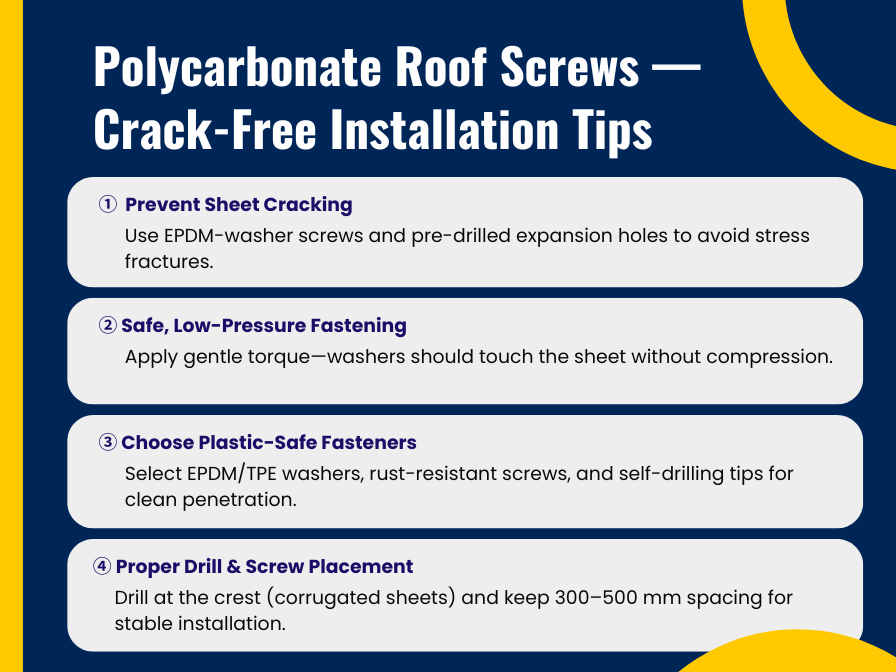
When installing polycarbonate roofing sheets—whether for awnings, skylights, or outdoor structures—the most common issues are cracking and water leakage. In most cases, these failures come from incorrect screw selection or improper fastening techniques.
This article explains how polycarbonate roof screws prevent cracking, how to choose the right fasteners, and how to fasten sheets safely. A complete FAQ is also included to help users find the answers they search for the most.
The Real Reason Polycarbonate Sheets Crack
— And How the Right Screws Prevent It
Polycarbonate sheets are known for their durability and impact resistance, but they can still crack if installed incorrectly. This section explains the true causes behind sheet cracking and how the right polycarbonate roof screws prevent damage.
Why Do Polycarbonate Sheets Crack? The Three Main Causes
- Thermal expansion stress
PC sheets expand and contract significantly. When screws are overtightened, the sheet cracks around the hole.
- Incorrect hole size
Holes that are too small leave no space for expansion, causing cracks as the sheet pushes outward when heated.
- Using the wrong roofing fasteners
Standard metal roofing screws lack cushioning washers and apply hard pressure on the sheet.
How Polycarbonate Roof Screws Prevent Cracking
- EPDM cushioning washers absorb stress without damaging the sheet
- Large washer heads distribute pressure evenly
- Self-drilling tips reduce impact stress during installation
Now that you know why cracking happens, let’s explore how polycarbonate roof screws differ from regular roofing fasteners — the differences are bigger than you'd expect.
What Makes Polycarbonate Roof Screws Different From Regular Roofing Fasteners?
Not all roofing screws are suitable for polycarbonate sheets. PC roofing requires “flexible fastening,” not rigid compression. This section breaks down the major differences between polycarbonate roof fasteners and standard metal roofing screws.
Four Key Differences Between Polycarbonate Roof Screws and Standard Screws.
1. Washer Material
- Polycarbonate roof screws use EPDM or TPE washers
- Metal roofing screws use metal or hard washers
→ Metal washers press too hard and can crack PC sheets instantly.
2. Pressure Distribution
- Larger washer heads distribute pressure more evenly
- Prevents stress points, micro-cracks, and sheet deformation
3. Enhanced Waterproofing
- Built-in sealing rings and UV-resistant washers
- Compatible with polycarbonate material and safe for long-term use
4. Gentle Fastening Force
- Self-drilling tips reduce impact when penetrating.
- Designed for plastics instead of hard metals.
With the differences now clear, the next step is choosing the right polycarbonate roof fasteners. The following section provides a practical guide for proper selection.
Choosing the Correct Fasteners for Crack-Free Installation
Different structures, sheet thicknesses, and environments require specific fastener types. This section outlines exactly how to select the correct polycarbonate roof screws for a safe, crack-free installation.
Five Key Tips for Selecting Polycarbonate Roof Fasteners
1. Choose EPDM or TPE Washers
- Prevent chemical reactions
- Offer UV resistance and flexible cushioning
2. Screw Length Depends on Frame Thickness
General recommendations:
- Small awnings / skylight frames: 10–16 mm
- Steel structures: 40–75 mm
- Corrugated sheets: add height of the crest
3. Use UV-Resistant Components
Prevents washer aging and future leaks.
4. Choose the Right Tip Type
- Metal frames → self-drilling screw
- Wood frames → wood-thread screw
5. Select Rust-Resistant Materials
Stainless steel or corrosion-resistant coated screws are preferred.
Even with the right screws, the sheets must be prepared properly before fastening. The next section explains the essential drilling and preparation steps.
Preparing Polycarbonate Sheets the Right Way Before Drilling
Take the sheet and screw it on” is not the correct method. Proper preparation before installation is the key to avoiding cracks. This section outlines the correct pre-installation steps.
Four Things You Must Do Before Fastening Polycarbonate Sheets.
1. Pre-Drill All Holes
- Holes must be 2–3 mm larger than the screw diameter
→ Allows thermal expansion
2. Support the Sheet While Drilling
Avoid drilling in midair to prevent invisible micro-cracks.
3. Keep Screw Spacing Even
- Recommended spacing: 300–500 mm
- For corrugated sheets, drill at the crest
4. Remove Burrs After Cutting
Burrs can spread cracks from the edges over time.
With preparation complete, the final task is fastening. This is where many mistakes occur, especially over-tightening. The next section teaches the correct fastening method.
How to Fasten Polycarbonate Sheets Without Over-Tightening
Over-tightening causes cracks, while under-tightening leads to leaks. This section explains the correct fastening technique to achieve the perfect balance.
Five Steps for Proper Screw Fastening:
1. Use Low Speed and Medium-Low Torque
Electric drills should not be set to high torque.
2. The Washer Should Only “Touch” the Sheet
- Never compress it harshly
- Should not deform or press into the sheet
3. Do Not Force the Sheet Down
Keep natural flexibility for thermal expansion.
4. Fasten Corrugated Sheets at the Crest
Ensures better drainage and even stress distribution.
5. Ensure the Screw Aligns Perfectly With the Frame
Prevents uneven stress or bending.
Frequently Asked Questions (FAQ)
Q:What types of structures can polycarbonate roof screws be used for?
A:They are suitable for awnings, canopies, skylights, carports, patio covers, greenhouses, and any PC roofing installation.
Q:Which washer material is best for polycarbonate roofing screws?
A:EPDM is the best option, followed by TPE. Both offer UV resistance and cushioning.
Q:How often should I inspect the screws after installation?
A:Inspect every 6–12 months for washer aging or loose screws.
Q:How can I prevent the polycarbonate sheet from cracking during installation?
A:
- Pre-drill holes with expansion space
- Use polycarbonate roof screws
- Avoid over-tightening
- Do not use metal washers directly on the sheet
Q:How far apart should the screws be spaced?
A:
- Standard spacing: 300–500 mm
- In high-wind areas: 250–300 mm
Further reading:
Cyclone Rated Roofing Screws — What Makes Them Wind Resistant?
Colorbond Roofing Screws — Prevent Rust and Maintain Roof Aesthetics
Metal Roof Screws — Choosing the Right Seal and Washer Type
Roofing Fasteners 101 — Preventing Leaks and Corrosion