
Latest News
- Home
- Latest News
- Wind Resistant Greenhouses: How to Choose the Right Fasteners?
2026.08.14
Latest News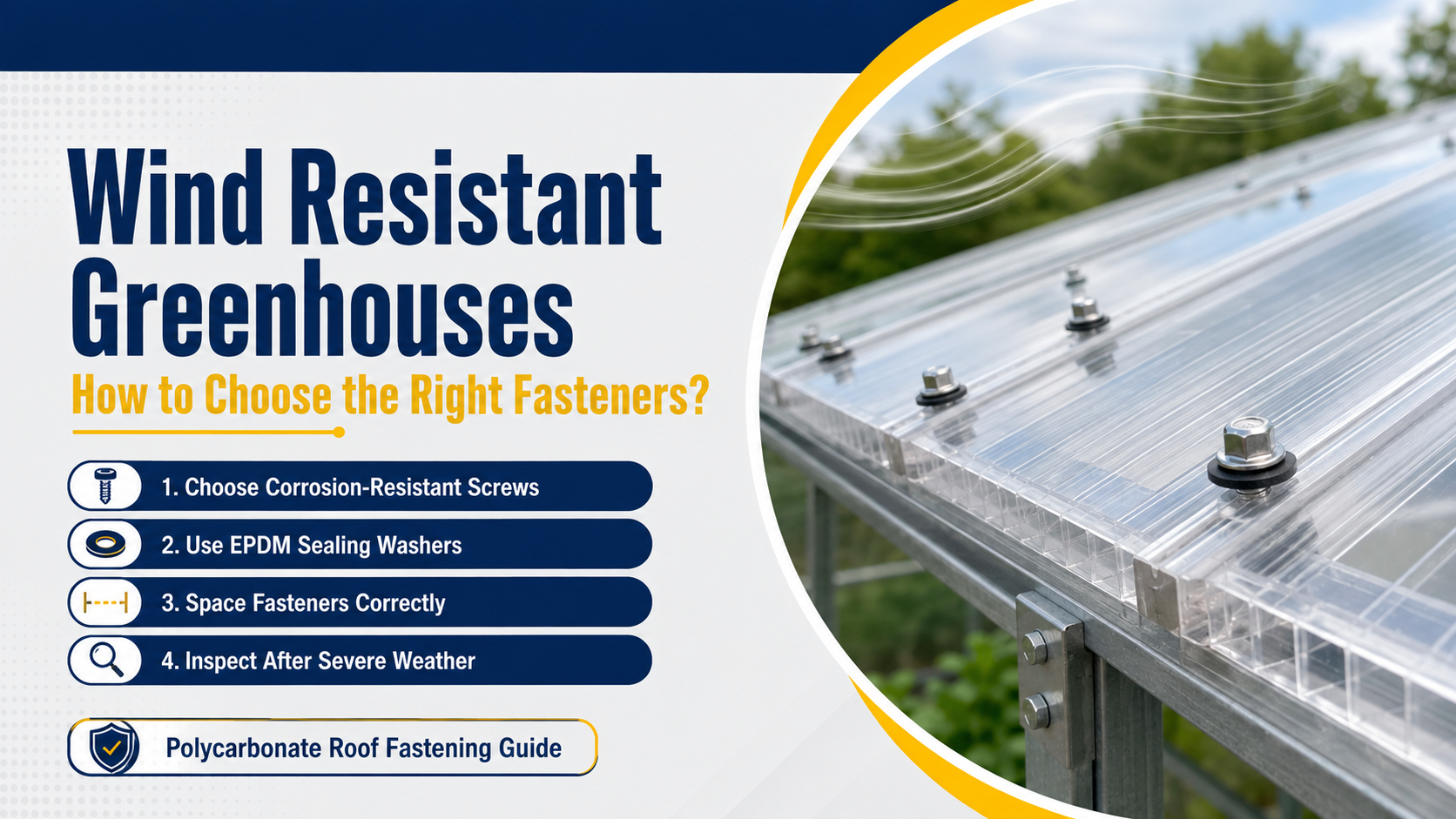
As extreme weather events become more frequent, many greenhouse owners are starting to ask the same question: How can a greenhouse withstand strong winds without constant repairs?
While most people focus on steel frames or thicker panels, an often-overlooked component is the fastening system. Even a well-designed structure can fail if the roof panels are attached using unsuitable screws or low-quality fasteners.
Building wind resistant greenhouses is not simply about choosing stronger materials. Every connection point plays a role in maintaining long-term stability. Selecting appropriate polycarbonate roof screws and durable roofing fasteners can help reduce panel movement, minimize leaks, and improve overall performance during harsh weather conditions.
This article explains how fastening systems affect greenhouse durability and what factors should be considered during installation.
Why Do Wind Resistant Greenhouses Need the Right Fasteners?
Many people assume that greenhouse failures happen because the frame is too weak. However, in many cases, strong winds expose weaknesses at the connection points rather than the structure itself.
When wind pressure increases, every panel, bracket, and roof section experiences uplift forces. If screws become loose or are installed incorrectly, the entire system can gradually weaken over time.
Common problems caused by improper fastening include:
- Polycarbonate sheets lifting during storms
- Roof leaks after heavy rain
- Increased vibration and noise
- Misaligned roof panels
- Structural instability over time
Even premium greenhouse materials cannot perform properly without reliable fastening support.
What factors improve wind resistance?
Several components work together to create a stable greenhouse structure:
- Proper structural engineering
- Secure foundation anchoring
- Suitable roof slope design
- Correct screw spacing
- High-quality fastening materials
- Proper installation techniques
When these elements work together, greenhouses are better equipped to withstand challenging weather conditions.
How Do Polycarbonate Roof Screws Protect Greenhouse Panels?
Polycarbonate sheets expand and contract as temperatures change throughout the year. Because of this movement, standard screws are often unsuitable.
Polycarbonate roof screws are specifically designed to secure roofing panels while allowing natural material movement without causing damage.
Unlike ordinary hardware screws, these products are built to withstand outdoor environments for extended periods.
What features should polycarbonate roof screws have?
High-quality screws typically include several important characteristics.
Stainless steel construction
Stainless steel offers excellent resistance against rust and corrosion, especially in humid environments.
EPDM rubber washers
These washers help create waterproof seals and prevent water penetration around screw holes.
UV-resistant components
Long-term sun exposure can degrade lower-quality materials. UV-resistant components help maintain durability.
Self-drilling designs
Self-drilling screws simplify installation and reduce labor time.
Why should regular screws be avoided?
Using standard screws may create several issues:
- Cracks around screw holes
- Water leakage
- Rust formation
- Loose roof panels
- Increased maintenance costs
Although ordinary screws may appear less expensive initially, improper hardware often leads to higher repair expenses later.
What Roofing Fasteners Are Best for Greenhouse Roofs?
Roofing fasteners do more than simply hold materials together. They help distribute pressure evenly across the greenhouse structure.
High-quality roofing fasteners can improve long-term durability and reduce stress on individual panels.
What materials are commonly used?
Different environments require different materials.
| Material | Advantages | Recommended Environment |
|---|---|---|
| Galvanized Steel | Cost-effective | Mild climates |
| Stainless Steel 304 | Excellent corrosion resistance | Most environments |
| Stainless Steel 316 | Superior salt resistance | Coastal areas |
Why does material selection matter?
Greenhouses are continuously exposed to:
- Sunlight
- Rain
- Humidity
- Temperature fluctuations
- Strong seasonal winds
Poor-quality fasteners may deteriorate much faster under these conditions.
Choosing weather-resistant materials helps extend the overall lifespan of the greenhouse and reduces future replacement costs.
Should coastal areas use different fasteners?
Yes. Coastal environments contain salt particles that accelerate corrosion.
Stainless Steel 316 is often recommended because it offers greater protection against salt exposure and harsh environmental conditions.
How to Install Screws for Better Wind Resistance?
Choosing premium hardware is only one part of the process. Proper installation techniques are equally important.
Even the best screws cannot perform properly if installed incorrectly.
Maintain consistent screw spacing
Uneven spacing can create weak areas that become vulnerable during strong winds.
Follow manufacturer recommendations to ensure balanced load distribution.
Avoid overtightening
Overtightening can create excessive pressure on polycarbonate sheets.
This may lead to:
- Cracks
- Warping
- Restricted thermal movement
Screws should be tightened securely without compressing the panels excessively.
Inspect washers during installation
Damaged washers can compromise waterproof performance.
Always verify that washers sit evenly against the panel surface.
Perform annual maintenance checks
Regular inspections help identify potential issues before they become expensive repairs.
Create a simple yearly inspection checklist:
- Check all roofing fasteners
- Inspect rubber washers
- Tighten loose screws
- Replace corroded components
- Remove debris accumulation
Routine maintenance can significantly extend greenhouse lifespan.
Conclusion
How long a greenhouse lasts often depends on details that many people overlook.
Building wind resistant greenhouses is not only about stronger steel frames or thicker roofing panels. Connection points throughout the structure determine whether the greenhouse can withstand years of wind exposure and changing weather conditions.
Investing in quality polycarbonate roof screws and reliable roofing fasteners helps improve stability, reduce maintenance requirements, and protect your investment over the long term.
Small hardware components may seem insignificant during construction, but they often make the biggest difference when severe weather arrives.