
Latest News
- Home
- Latest News
- Greenhouse Roof Design: How to Choose Roof Materials?
2026.08.14
Latest News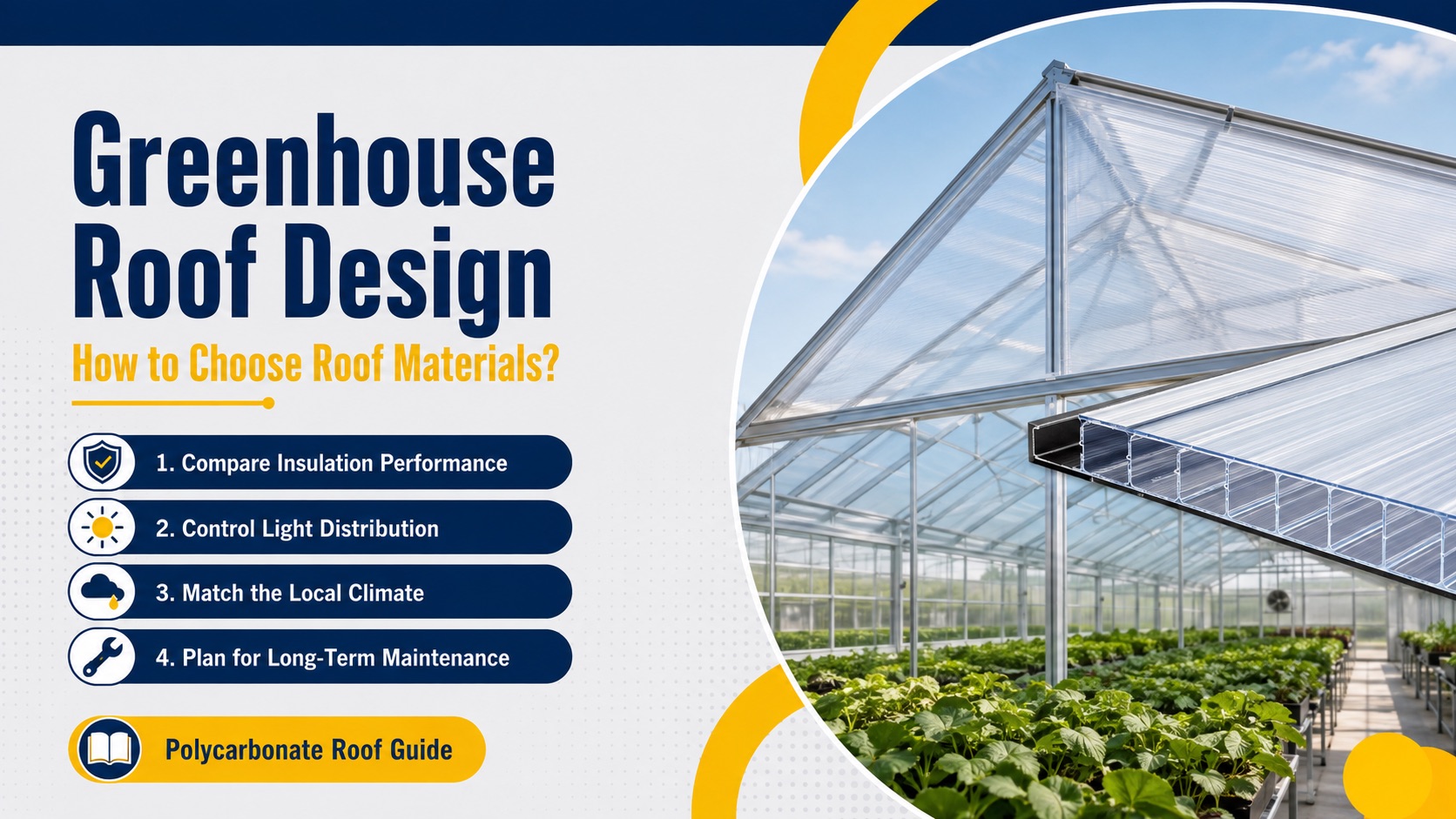
When planning a greenhouse, many people focus on the frame size, ventilation system, and plant selection first. However, one of the biggest factors affecting long-term growing performance is the greenhouse roof design.
The roof does much more than cover the structure. It controls how sunlight enters the greenhouse, how heat is retained, and how much energy is required throughout the year.
Today, many greenhouse owners choose a polycarbonate roof because it offers durability, insulation, and balanced light distribution. At the same time, selecting the proper roof materials can help improve energy efficiency while creating healthier growing conditions.
Before building a greenhouse, it is helpful to understand how roof design decisions affect temperature control, sunlight management, and long-term maintenance costs.
Why Does Greenhouse Roof Design Affect Energy Efficiency?
Many greenhouse owners do not realize how much the roof influences operating costs.
The roof is constantly exposed to sunlight, wind, rain, and changing temperatures every day.
How does roof design affect greenhouse temperatures?
A well-designed roof can help:
- Reduce heat loss during winter
- Lower excessive temperatures during summer
- Improve airflow circulation
- Create more stable growing conditions
- Reduce heating and cooling expenses
What problems happen when greenhouse roof design is poor?
Several issues may appear over time.
Common problems include:
- Uneven temperatures
- Excessive heat buildup
- Higher energy consumption
- Increased moisture problems
- Inconsistent plant growth
Choosing the right roof design early can help avoid many long-term operating issues.
Why Are More Greenhouse Owners Choosing a Polycarbonate Roof?
When comparing greenhouse roofing options, many people evaluate glass, acrylic, and polycarbonate.
For many projects, a polycarbonate roof offers a good balance between performance and affordability.
What are the benefits of a polycarbonate roof?
✦ Better insulation performance
Polycarbonate can help retain indoor temperatures more efficiently.
✦ Strong impact resistance
It can withstand various weather conditions, including strong winds and hail.
✦ Improved light diffusion
Instead of creating intense sunlight in one area, it helps distribute light more evenly.
✦ Lightweight construction
Polycarbonate places less stress on the greenhouse structure.
Why don't all greenhouse owners use glass?
Although glass looks attractive, it often requires:
- Additional structural support
- Higher installation costs
- More maintenance
- Increased risk of breakage
For many residential and commercial greenhouses, polycarbonate is often a practical option.
How Does Greenhouse Roof Design Help Control Sunlight?
Plants need sunlight, but excessive sunlight can also create problems.
The right greenhouse roof design helps manage how light enters the growing space.
Why is light control important?
Proper light management can help:
- Support healthier plant growth
- Reduce plant stress
- Improve temperature stability
- Encourage balanced development
Which roof designs improve light distribution?
Several roof designs are commonly used.
✦ Gable roof designs
These provide balanced sunlight exposure and effective ventilation.
✦ Curved roof designs
Curved roofs help distribute sunlight more evenly throughout the greenhouse.
✦ Diffused polycarbonate panels
These panels soften direct sunlight and reduce harsh shadows.
Do all plants need direct sunlight all day?
No.
Different crops require different amounts of sunlight. Some plants grow better with filtered light rather than constant direct exposure.
Matching the roof design to the plants being grown can improve overall results.
How Do You Choose the Right Roof Materials for a Greenhouse?
Many people select roof materials based only on price, but long-term performance is equally important.
What should you compare before choosing roof materials?
Several factors should be evaluated.
Consider:
- Local climate
- Temperature fluctuations
- UV exposure
- Wind resistance
- Maintenance requirements
- Budget
How do common roof materials compare?
| Roof Material | Benefits | Considerations |
|---|---|---|
| Polycarbonate | Lightweight, durable, insulated | Moderate cost |
| Glass | Excellent visibility | Heavy and fragile |
| Acrylic | Clear appearance | Can scratch more easily |
Which roof materials work best in extreme weather?
For many climates, polycarbonate performs well because it offers:
- Better impact resistance
- Strong insulation performance
- Reduced structural weight
- Long-term durability
However, the best material still depends on your location and greenhouse usage.
Conclusion
Choosing the right greenhouse roof de affects much more than appearance.
It directly impacts temperature control, energy efficiency, light distribution, and long-term greenhouse performance.
Many greenhouse owners choose a polycarbonate roof because it provides a balance between durability, insulation, and light management. Selecting suitable roof materials can also help reduce maintenance costs and create a healthier growing environment.
Careful planning before construction often results in better plant growth and a more efficient greenhouse for years to come.